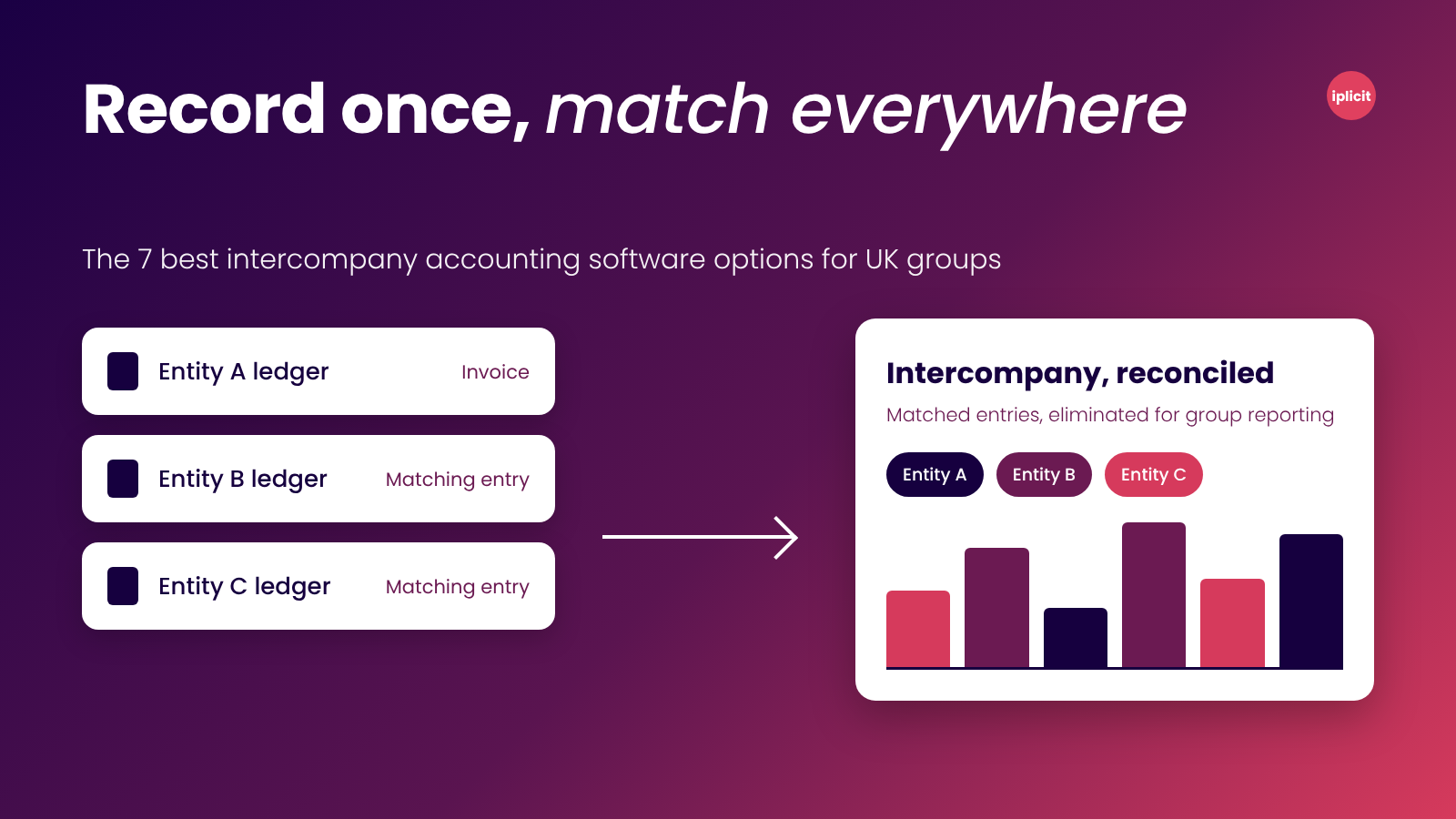
Intercompany accounting software falls into two categories: accounting systems with native intercompany handling features and specialist tools that connect with several ERPs and match balances across them. In the first category, iplicit and Sage Intacct are the best options. And BlackLine stands out in the second category.
Quick comparison
Intercompany entries need to match at both ends
Your group reporting will only work if both sides of every intercompany entry match. But that becomes difficult when one entity posts a sale, and the other forgets to record the corresponding purchase.
Intercompany accounting software helps prevent and identify these mismatches, and there are two groups. One group is accounting systems that let you post an entry in one entity’s accounts and automatically create the corresponding entry in the other. The other are specialist tools that sit on top of your ledgers and match what each one says.
This article helps you clarify which one your multi-entity group actually needs.
Why listen to us?
At iplicit, our cloud accounting software, with built-in intercompany eliminations, has helped organisations save time and reduce errors in month-end group reporting.
Health Poverty Action, for example, used to run separate copies of QuickBooks across its territories before adopting iplicit. After moving to our platform, it saved around six weeks when preparing its project balance sheets at year-end (read the case study).
“Also, the timesaving we experience with iplicit is enormous! We are currently preparing our year-end process and already we are saving 6 weeks of our time consolidating the various project balance sheets from various Qbs versions. Just take Donor Reports as an example – it’s essential that we have transparency and can report back to Donors on how and where their funds have been spent. With our old system, each Donor report would take 3 weeks to produce, with iplicit if all data has been entered correctly, a report can be done in less than 2 days!”
Sandra Tcheumeni Boschet, Director of Finance & Operations, Health Poverty Action
We understand what makes intercompany accounting software suitable for multi-entity groups, and each software on this list was evaluated using that knowledge.
What is intercompany accounting software?
Intercompany accounting software does three jobs for a group. It records transactions between entities, matches both sides, and eliminates them from the consolidated accounts so they don’t inflate the group’s figures.
Say a UK parent recharges a subsidiary for shared services. Both entities must record the same amount, and the internal charge must be eliminated when the group accounts are consolidated. That way, the group doesn’t report income from a transaction with itself.
Why is intercompany accounting software important?
- Both sides of every transaction must match: A sale in one entity needs a matching purchase in the other, and one missing half prevents the group accounts from balancing.
- Unrealised profits must be eliminated: FRS 102 paragraph 9.15 requires profits on intragroup sales still held in inventory or fixed assets to be removed from the consolidated accounts.
- Currency differences must be accounted for: Under paragraph 30.22, you can’t cancel an intragroup loan between a pound entity and a euro entity without showing the exchange difference in the group results.
- Switching between systems wastes time: In an iplicit survey of 1,000 finance decision-makers, 38% named logging in and out of multiple systems as one of the top causes of inefficiency.
- Auditors need a clear audit trail: They need to see who posted each side of a transaction and when, which can be difficult to establish from spreadsheets.
How we evaluated these software options
We reviewed each option using documentation from its own site. We looked at six criteria:
- How intercompany transactions are recorded, including whether both entities need to post entries.
- When intercompany eliminations happen, whether at posting, consolidation, or period close.
- How mismatches are identified, through tools like a matrix or exceptions queue.
- Whether it integrates with multiple ERPs or works only within its own ledger.
- How well it supports UK groups, including UK support and FRS 102 reporting.
- How transparent its pricing is, including whether prices are published or available only on request.
The 7 best intercompany accounting software options
1. iplicit (accounting system)
Best for: UK multi-entity groups that want one ledger, with intercompany handled in the same system.
iplicit is cloud accounting software built around multi-entity groups. If you are currently running accounting for two to six entities on Sage 50, Xero or an ageing on-premise system, intercompany transactions are probably where your month-end drags.
So, we built iplicit to remove that friction. On iplicit, you record an intercompany transaction once, and the software creates the matching entry in the other entity and handles eliminations for you.
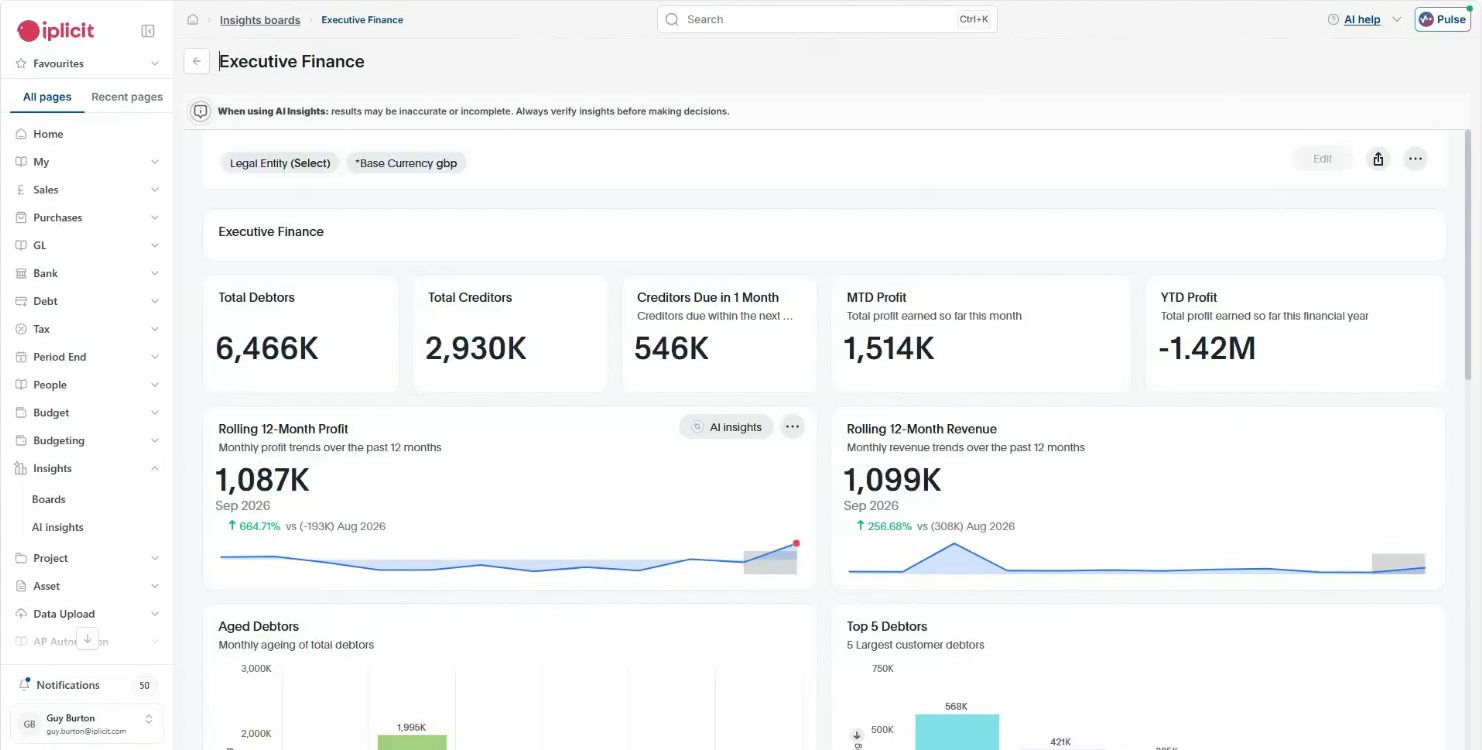
Each entity can have its own currency, tax settings and financial year. You can consolidate across entities and currencies in one system, with intercompany handled in the system and drill-down to the source transaction. For more details on iplicit’s intercompany accounting features, see our group accounting and automated consolidation pages.
The Recruitment Group now manages accounting for its four businesses in iplicit. While on Sage, The Recruitment Group’s finance director, Narinder Uppal, says, "With Sage, you can only open up one entity at a time." Now its finance team can view all four entities together and generate consolidated group reports whenever needed.
“All the finance team have said to me, at one point or another, that the best thing I’ve ever done was bringing in iplicit. They love saving time, they love investing time in the right things, which is to help our candidates.”
Narinder Uppal, Finance Director, The Recruitment Group
However, iplicit is not the right fit for every group. If your entities run on several different ERPs and you want to match balances across them, a specialist tool is a better fit.
Key features
- Intercompany entries: Record a transaction once and let iplicit create the matching entry in the other entity.
- Eliminations: Handled for you, so intercompany activity doesn’t inflate your consolidated figures.
- Consolidated reporting: Report across entities and currencies in one system and drill down to the source transaction.
- Entity-level settings: Give each entity its own currency, tax settings, and financial year.
- Flexible dimensions: Slice the group P&L and balance sheet by project, fund, or department without growing the chart of accounts.
- Excel add-in: Pull live iplicit data into Excel with formulas that refresh on demand.
Pricing
iplicit offers transparent subscription pricing that scales with your users and entities, with fund accounting, multi-entity and multi-currency capability included rather than sold as extra modules. It’s sold as an annual subscription. You can check out our licensing agreement for full terms.
Pros
- Record an intercompany transaction once and iplicit creates the matching entry in the other entity, with eliminations handled for you.
- Keeps every entity in one ledger, so staff don’t log in and out of separate systems.
- Migrates and tests your data in a sandbox before go-live, and nothing goes live until you’ve reviewed and signed it off.
Cons
- Doesn’t match intercompany balances held in other ERPs, so it’s the wrong tool for a group running several ledgers.
- Budgeting and FP&A depth is lighter than a dedicated planning tool.
- Built for mid-market groups, so it isn’t the best fit for very large enterprises.
2. BlackLine (specialist tool)
Best for: Multinationals matching and netting intercompany balances across several ERPs.
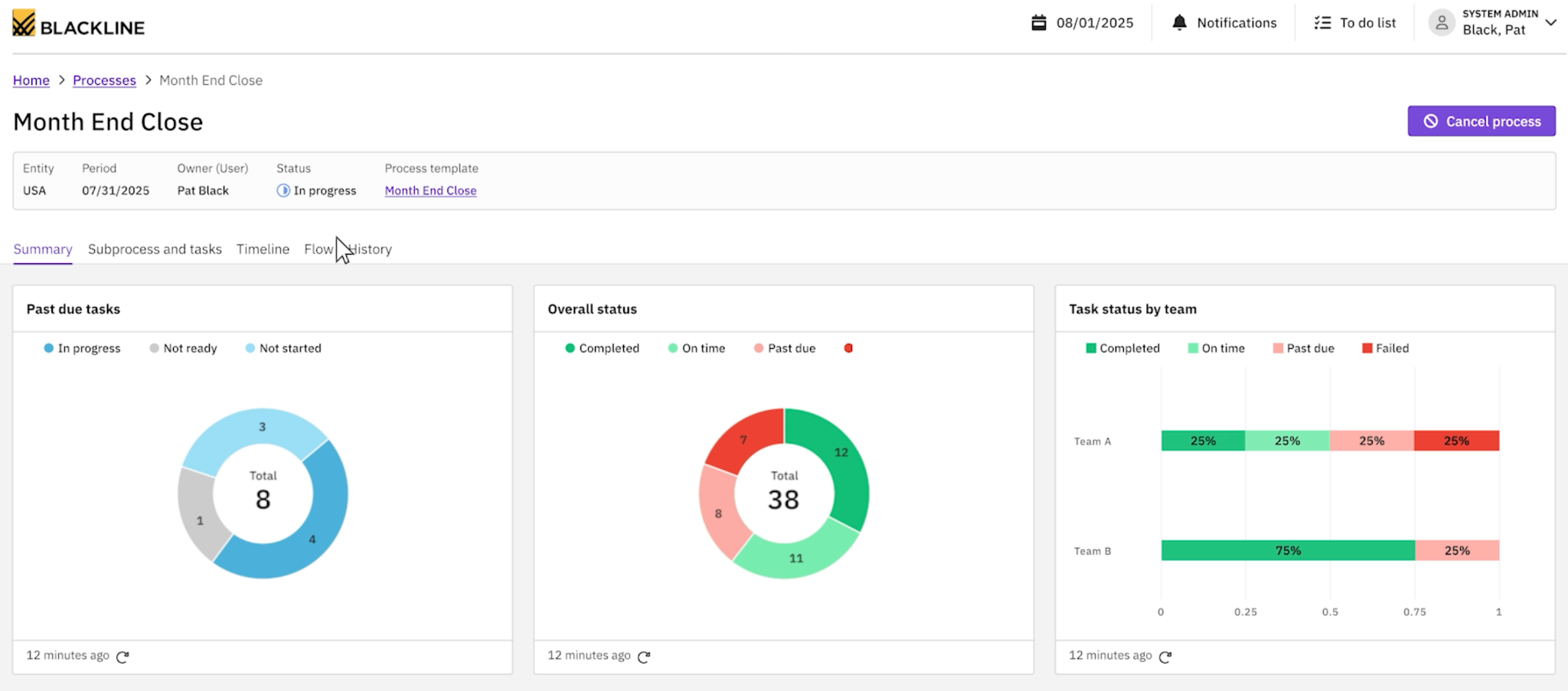
BlackLine is a US-based financial close platform. Its intercompany products sit between your entities’ ledgers rather than inside any one ledger. Intercompany Balance & Resolve works across ERPs, flagging out-of-balance trading pairs and the transactions behind them. Each exception is then sent to someone to investigate and resolve.
A companion product, Intercompany Net & Settle, uses bilateral and multilateral netting to reduce the number of payments between entities. That is great for a multinational group where numerous ERPs each hold part of the picture and a shared services team needs to investigate differences. For a UK group with just four entities on one ledger, however, it’s more than you need.
Key features
- Exception flagging: Spot out-of-balance trading pairs and the transactions behind them.
- Resolution workflows: Send each exception to the right person and post the correcting journal.
- Netting: Reduce the number of settlement payments with bilateral and multilateral netting.
- ERP-agnostic design: Work across several ERPs without replacing any of them.
Pricing
BlackLine doesn’t publish a price list, so you’ll need to ask the team for a custom quote.
Pros
- Handles intercompany operations across many different ERPs in one place.
- Netting reduces the number of settlement payments between entities.
- Resolution workflows give each mismatch a clear owner and trail.
Cons
- Sits on top of your existing ledgers, so you still need separate accounting software.
- Designed for large multinational groups, which may make it excessive for a small UK group.
- You need a sales conversation to get a price.
3. Sage Intacct (accounting system)
Best for: Larger organisations that need deep dimensional reporting alongside intercompany.
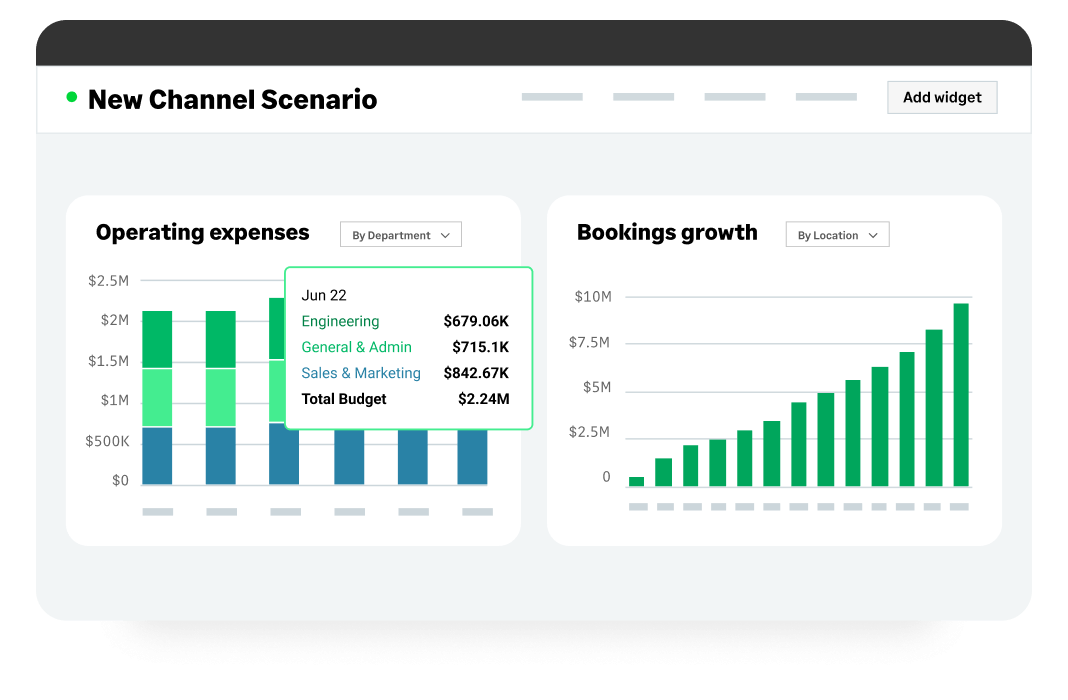
Sage Intacct is a cloud accounting system for mid-sized and larger organisations, with multi-entity accounting as a core feature. Sage says it automates intercompany eliminations during consolidation and lets you set up and manage relationships between entities in one place.
It also handles intercompany entries between entities with different base currencies. Sage offers a separate planning product, making Intacct relevant to organisations that need dimensional reporting and budgeting alongside intercompany accounting. If you only need intercompany accounting and consolidation, however, its feature depth might be more than you need.
Key features
- Eliminations: Automate intercompany eliminations at the point of consolidation.
- Entity setup: Create new entities with configurable rules for inter-entity transactions and bank accounts.
- Shared structure: Let new entities inherit existing charts of accounts or define their own.
- Journaled consolidations: Review eliminations and currency effects as separate entries before posting adjustments.
Pricing
Sage’s UK pricing page lists Sage Intacct plans from £1,200 a month excluding VAT, before support and implementation costs. The final quote also factors in your modules, users, business entities and integrations.
Pros
- Eliminations run as part of consolidation, with currency effects visible as journals.
- Automates exchange-rate conversions and revaluations as part of consolidation.
- Sage sells a separate planning product with in-depth budgeting features.
Cons
- Your fee increases with every module, user, and entity you add.
- Base subscription price excludes support and implementation fees.
- Sage’s planning product is sold separately, so you need an extra licence for budgeting.
4. NetSuite (accounting system)
Best for: Growing groups that want a full ERP.
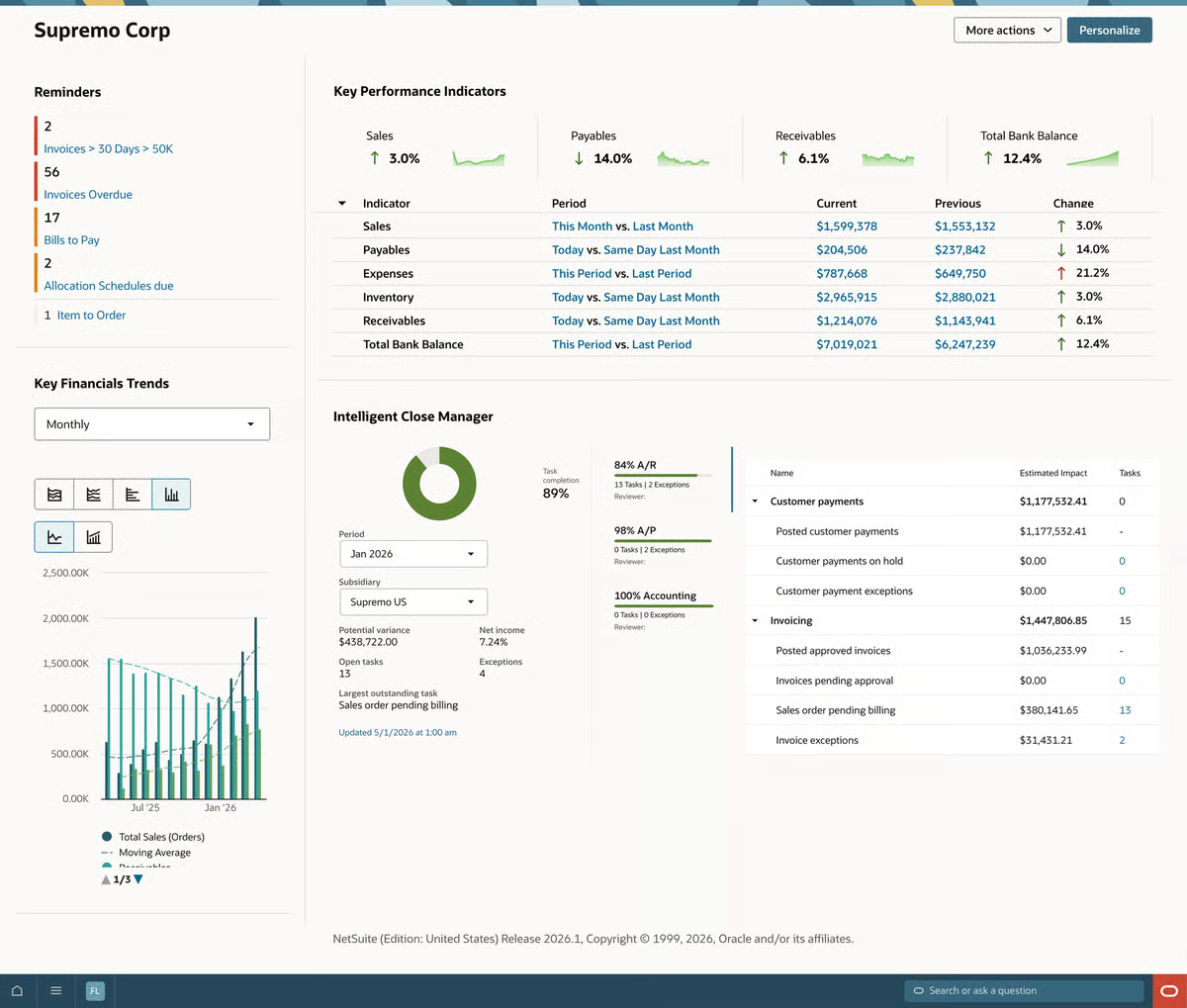
NetSuite is Oracle’s cloud ERP, and its OneWorld edition supports multiple subsidiaries. Its Automated Intercompany Management feature generates elimination journals from transactions marked for elimination. Without this add-on feature, you’ll need to create and post those entries manually.
Eliminations take place during period close, and you can review the results in an Intercompany Elimination report. An intercompany purchase order can also generate a matching sales order in the other subsidiary, which is useful when your entities trade stock.
NetSuite suits growing groups that want finance, inventory, and order management in one ERP, but smaller groups may find that it’s more than they need.
Key features
- Automated eliminations: Generate elimination journals for the transactions you’ve marked for elimination.
- Intercompany orders: Create a sales order in one subsidiary from a purchase order in another.
- Inventory transfers: Move stock between subsidiaries and keep the accounting entries linked.
- Period close checklist: Run intercompany eliminations as a step in the close.
Pricing
NetSuite doesn’t publish its pricing, so you’ll need to ask for a custom quote. Its pages mention an annual licence calculated from the core platform licence, optional modules, and number of users. OneWorld is an add-on cost, and you also have to pay a one-time implementation fee.
Pros
- A full ERP, so intercompany sits alongside inventory and order management.
- Order-linked eliminations suit groups that trade goods between entities.
- An Intercompany Elimination report lets you review what the close has removed.
Cons
- Needs OneWorld before you can use automated intercompany.
- Automated eliminations run only from the period close checklist.
- No published price, so you can’t budget without a sales conversation.
5. Trintech (specialist tool)
Best for: Large groups on SAP, Oracle or Workday.
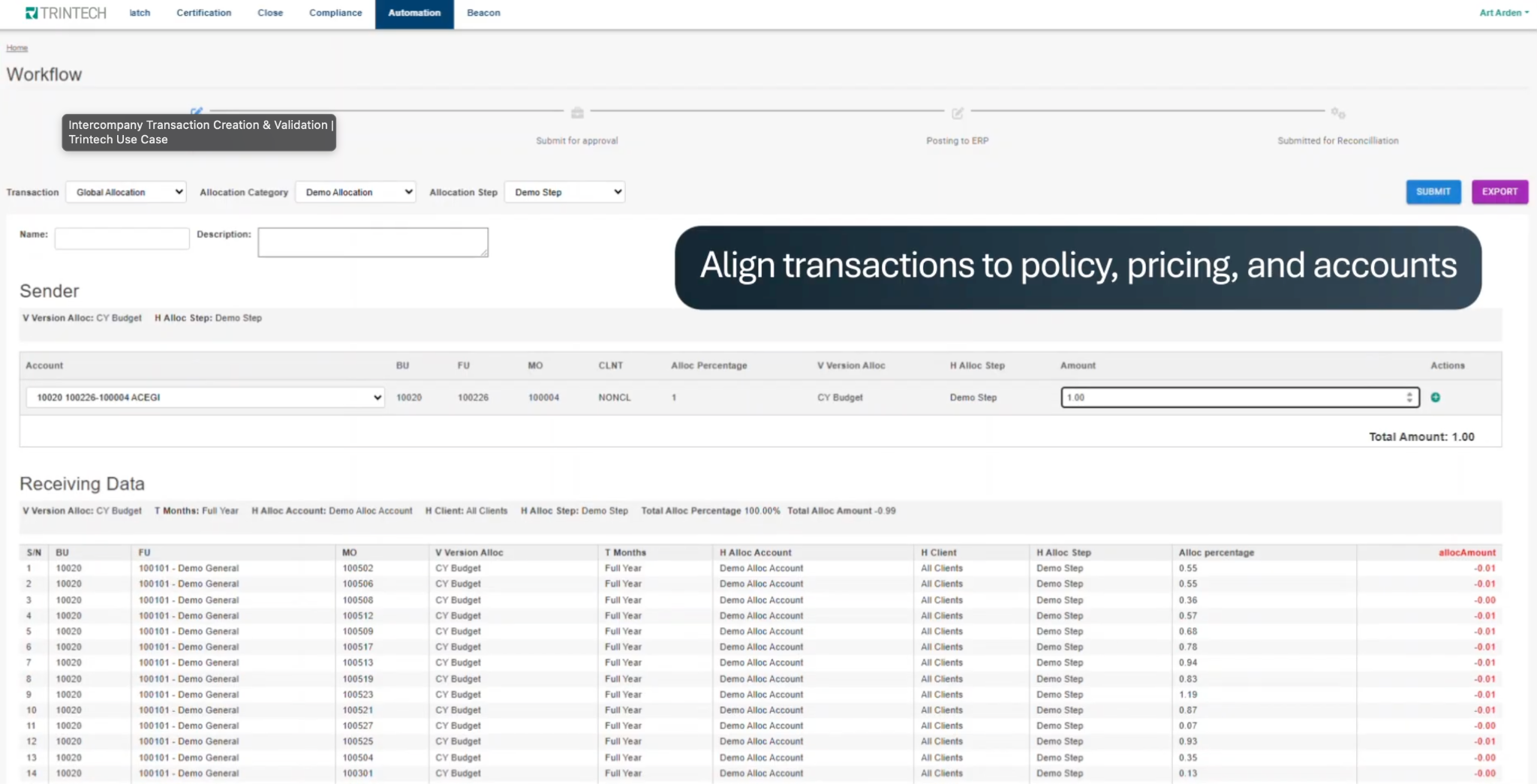
Trintech’s Cadency platform supports the financial close, while Cadency Intercompany is designed for groups with high volumes of intercompany activity. Trintech says it automates the recording, reconciliation, and elimination of intercompany transactions. It connects with Microsoft Dynamics, NetSuite, Oracle, SAP, and Workday, among others.
According to Trintech’s team, LKQ Corporation used the platform to automatically reconcile 90% of its intercompany transactions and completed more than 100 acquisitions without adding headcount.
However, do note that Cadency Intercompany is best suited to large, acquisitive groups using SAP or Oracle and will be more than a smaller UK group needs.
Key features
- Recording: Capture intercompany transactions in one place across ERPs.
- Reconciliation: Match balances between entities with preventative and detective controls.
- Elimination: Generate the entries that remove intercompany transactions from the group accounts.
- Settlement: Support the settlement process once balances agree.
Pricing
Trintech doesn’t publish its prices. You need to book a demo to get a custom quote.
Pros
- Works with most of the major enterprise systems, so you aren’t tied to just one.
- Preventative and detective controls are built into the reconciliation step.
- Suits groups that keep buying companies on different systems.
Cons
- Doesn’t replace your ledgers, so you need an accounting system beneath it.
- Aimed at large enterprises, which makes it feature-heavy for groups with just a few entities.
- No published price, so you can’t budget without booking a demo.
6. Virtual Trader (specialist tool)
Best for: Groups with Oracle ERPs.

Virtual Trader started as an add-on for Oracle E-Business Suite, but its Intercompany Cloud product now works with other ERPs too. It maintains a dedicated intercompany subledger, tracking receivables and payables between entities before they reach the general ledger. And you can reconfigure its rules without writing code.
It also matches transactions across systems and charts of accounts, and automates operational transfer pricing calculations. This makes it a good fit for groups using Oracle ERPs with heavy intercompany trading. But if you use just a single ledger, it may add an unnecessary layer to your accounting setup.
Key features
- Intercompany subledger: Track and settle receivables and payables between entities before they reach the ledger.
- Auto-matching: Match transactions across multiple instances, systems, and charts of accounts.
- Business rules: Change how entries are built without writing code.
- Compliance: Automate operational transfer pricing calculations across entities.
Pricing
Virtual Trader doesn’t share its prices publicly, so you’ll need to book a demo to get a quote.
Pros
- Designed specifically for intercompany accounting, with more specialised features than a general ledger.
- The subledger gives a clean aged view of what’s owed between entities.
- Works as both an extension of Oracle E-Business Suite or as a standalone cloud system.
Cons
- Adds another system to manage alongside your existing ledgers.
- Its deepest integration is with Oracle E-Business Suite.
- You’ll need a demo conversation before you can get a price.
7. AccountsIQ (accounting system)
Best for: UK and Irish multi-entity organisations.
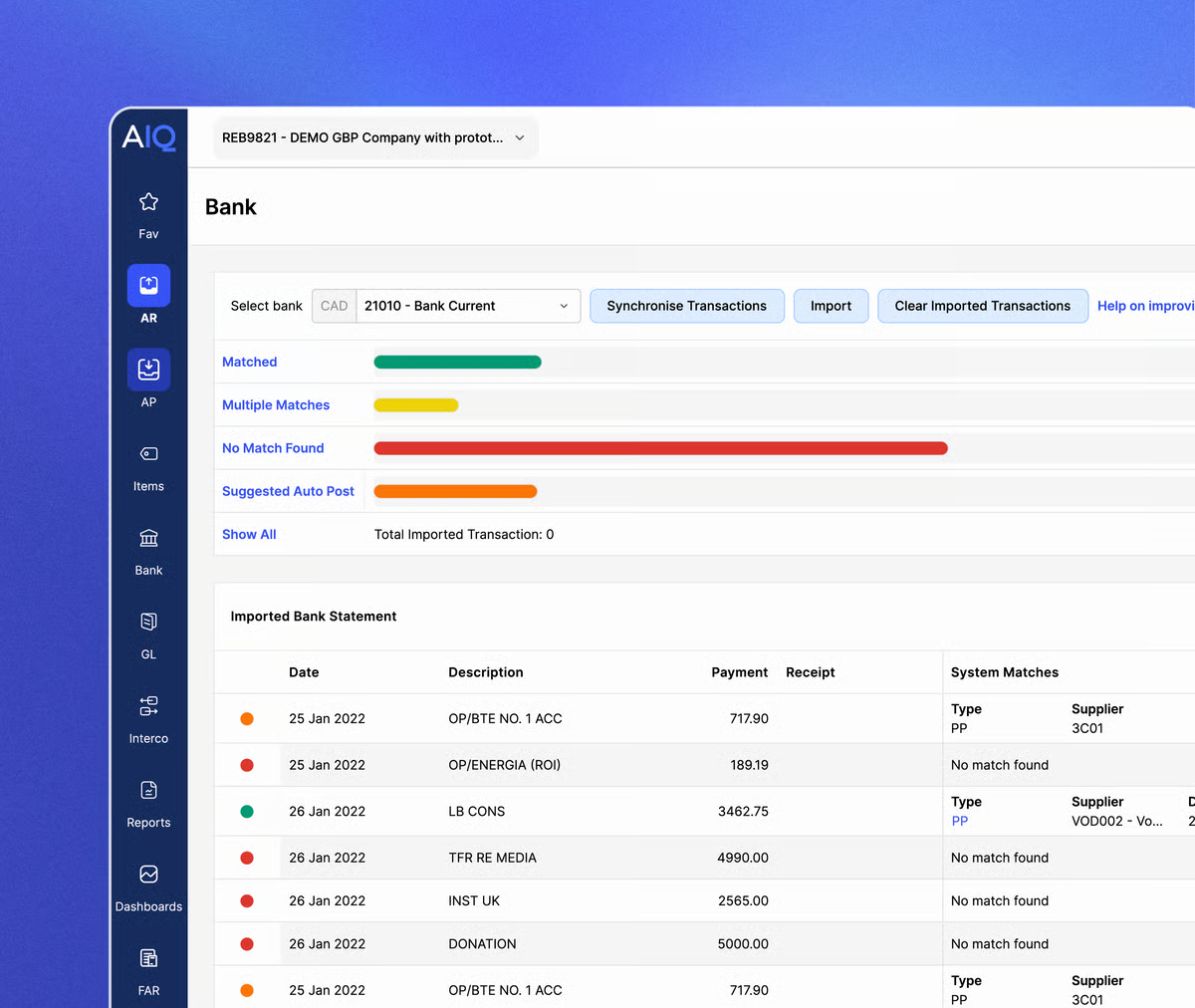
AccountsIQ is a cloud accounting system for multi-entity organisations, headquartered in Dublin. It automatically creates the corresponding intercompany transaction in any linked entity, and each intercompany purchase invoice waits for the receiving entity to accept it before posting. This prevents a miscoded entry from reaching the ledger.
An IC Matrix report with transaction-level drill-down shows your balances and any out-of-balance accounts. Configured intercompany balances are then eliminated automatically during consolidation.
AccountsIQ is the closest match to iplicit on this list. It suits groups that want one ledger and comes with UK- and Irish-based support with a 27-minute average response time.
Key features
- Matching entries: Generate the corresponding intercompany transaction in any linked entity.
- Acceptance step: Hold intercompany purchase invoices until the receiving entity accepts and codes them.
- IC Matrix report: Reconcile balances with drill-down to the transaction.
- Automatic eliminations: Eliminate configured intercompany balances during consolidation.
Pricing
AccountsIQ’s pricing page shows its Core, Growth and Scale plans as priced on application, while its FAQ says plans start from €275 a month for Core, which covers a single entity. Scale is the plan AccountsIQ positions for multi-entity organisations.
Pros
- The acceptance step catches miscoded intercompany invoices before they are posted.
- The matrix report with drill-down makes balance checks quick.
- Support is based in the UK and Ireland.
Cons
- Plan prices beyond the Core starting figure are on application.
- Narrower in scope than a full ERP.
How to choose the right intercompany accounting software
If your entities can operate on one ledger, start with the accounting systems. For a group with two to six UK entities using Sage 50 or Xero, iplicit or AccountsIQ will often fit best. Larger organisations that need budgeting, planning and detailed dimensional reporting might prefer Sage Intacct or NetSuite.
If your entities already use different ERPs and you can’t merge them soon, consider BlackLine, Trintech, or Virtual Trader. These tools work across your existing ledgers and reconcile transactions between them. Virtual Trader is the best option if you use Oracle E-Business Suite, while Trintech and BlackLine support systems like SAP and Workday.
Our finance software evaluation checklist can help you compare platforms you are considering against your organisation’s needs.
Match the tool to the way your group is built
Intercompany software works best when it matches how your ledgers are set up. If your entities can share one system, choose an accounting system with built-in intercompany management that lets you post once, then automatically handles the corresponding entries and eliminations.
If your entities need to stay on separate accounting systems, a specialist tool can connect your existing ledgers and reconcile transactions between them without requiring you to migrate everything first.
If you’re leaning towards the single accounting system option, iplicit is one of the best ones for a UK group. You can book a demo, and we’ll walk you through how it works using your own entities. But if you’d rather check it out yourself, take the Quick Tour first.
How do you fix intercompany balances that don’t match?
How do you fix intercompany balances that don’t match?
Start by identifying which entity recorded its side of the transaction and which didn’t, as missing entries are a common cause of mismatches. Then agree on the correct amount, date, and currency, post the missing or correcting entry, and check the balances again. An intercompany matrix speeds this up by showing balances between all entity pairs in one view.
What happens to intercompany loans in different currencies?
What happens to intercompany loans in different currencies?
Under FRS 102 paragraph 30.22, you can’t eliminate an intragroup monetary balance against its counterpart without showing the exchange difference. That difference stays in the group profit or loss, or in other comprehensive income where the standard requires it.
How do you eliminate unrealised profit in stock?
How do you eliminate unrealised profit in stock?
If one entity sells goods to another at a profit and those goods remain unsold at period-end, the group hasn’t earned that profit yet. FRS 102 paragraph 9.15 requires you to eliminate the profit in full. Your system needs to identify inventory purchased from other group entities so you can easily calculate and remove the unrealised profit.
What is an intercompany matrix?
What is an intercompany matrix?
An intercompany matrix is a grid showing what each entity owes to, or is owed by, every other entity in the group. It highlights mismatches where the two entities’ recorded balances don’t agree. AccountsIQ includes one as a standard report.
When should a group move off spreadsheets for intercompany?
When should a group move off spreadsheets for intercompany?
Consider moving to dedicated software when reconciling intercompany balances regularly delays month-end or when only one person knows how to manage the workbook. Our guide to why multi-entity accounting is so complicated explores the problems these can cause.