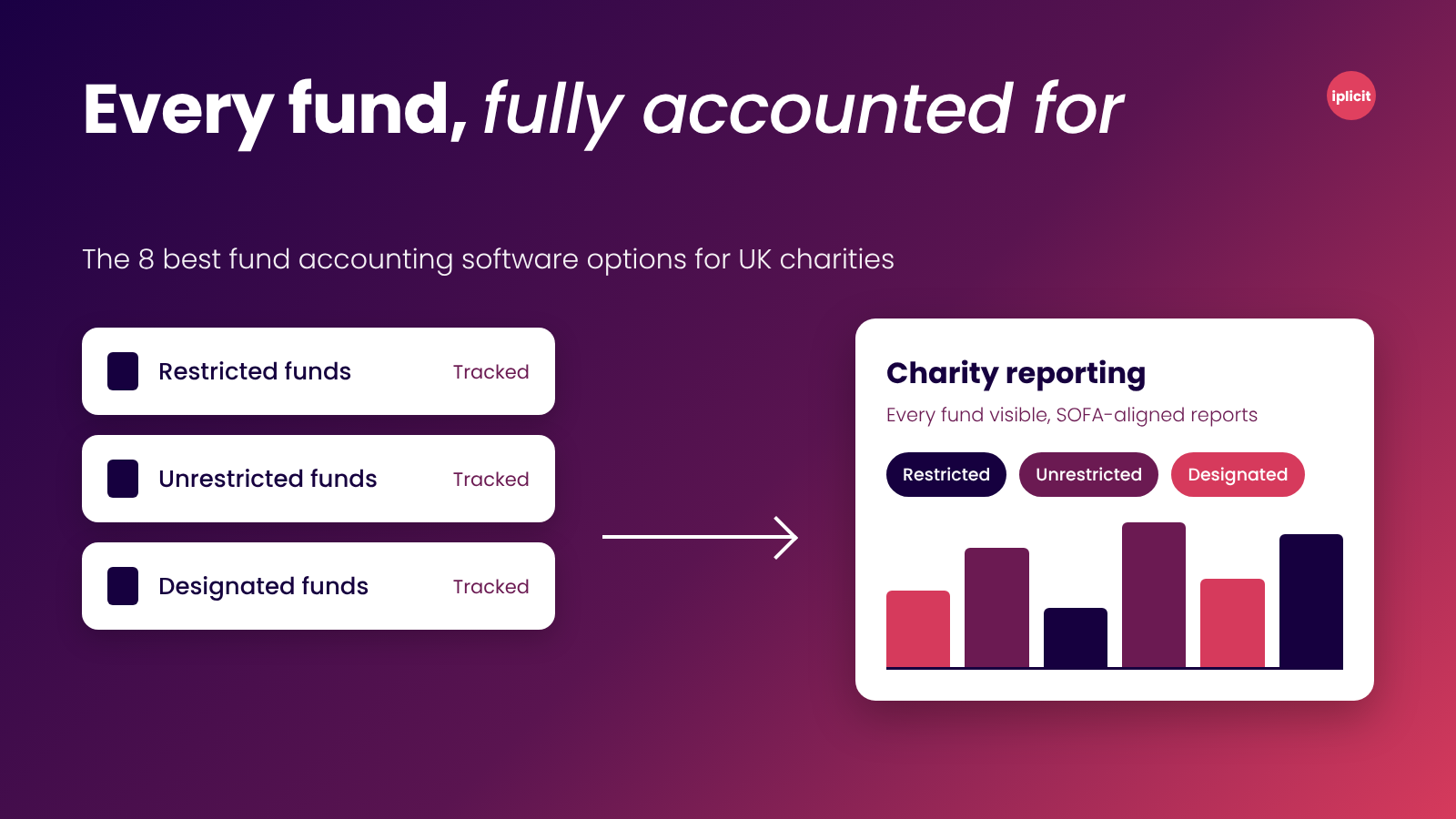
UK charities need accounting software that can separate restricted, unrestricted, and designated funds. The software also needs to produce a Statement of Financial Activities (SOFA) and reports that follow the Charities SORP (FRS 102). General-purpose accounting tools often aren’t enough because they mostly bolt fund tracking on as an afterthought, if they offer it at all.
Dedicated fund accounting software makes it easier to manage different funds, track how money is used, and produce the reports charities need.
Quick comparison
Commercial accounting software isn’t the best fit for your UK charity
Commercial accounting records what comes in and what goes out. But charity accounting also has to track whose money it is, what it was given for, and whether you’ve spent it as the donor intended. Get that wrong, and your trustees have to answer to the Charity Commission as well as your board.
This is what makes fund accounting different and why general-purpose commercial accounting software is unsuitable for it. Your fund accounting software needs to separate restricted grants from general donations and allocate shared costs across funds fairly. Then, it needs to bring everything together in a SOFA that meets the Charities SORP (FRS 102).
This article covers eight tools that can handle these requirements.
Why listen to us?
At iplicit, we work with charities across the UK, from local hospices to international NGOs.
Health Poverty Action is a good example. They run programmes in 16 countries and needed to track spending by territory, project and donor. After adopting iplicit, the time it took them to prepare donor reports went from roughly three weeks to under two days. And year-end consolidation now takes them about six weeks less than it did before.
“Also, the timesaving we experience with iplicit is enormous! We are currently preparing our year-end process and already we are saving 6 weeks of our time consolidating the various project balance sheets from various Qbs versions. Just take Donor Reports as an example – it’s essential that we have transparency and can report back to Donors on how and where their funds have been spent. With our old system, each Donor report would take 3 weeks to produce, with iplicit if all data has been entered correctly, a report can be done in less than 2 days!”
Sandra Tcheumeni Boschet, Director of Finance & Operations, Health Poverty Action
We built our finance software for multi-entity charities, so we understand which features matter most and used those features as the criteria for reviewing the tools in this article.
What is fund accounting software?
Fund accounting software tracks money according to the restrictions on how it can be used, rather than just grouping it by income and expenditure categories.
In a commercial organisation, a pound of revenue is simply a pound of revenue. But in a charity, that pound could be a restricted grant earmarked by the donor for a specific purpose, a designated fund set aside by the trustees for planned spending, or an unrestricted donation available for general running costs. And mixing these funds up isn’t just poor bookkeeping; it can put the charity in breach of its legal obligations.
Fund accounting software separates and tracks each fund within the same ledger. It records income, expenditure and balances at fund level, allocates shared costs like rent and salaries across funds, and produces the reports trustees, auditors and the Charity Commission need.
Among these reports, the most important is the Statement of Financial Activities (SOFA), which replaces the profit and loss account for charity financial statements. This report breaks down income and expenditure by fund type and is a core requirement of the Charities SORP (FRS 102), the reporting framework that governs how UK charities prepare their accounts.
Why UK charities need specialist fund accounting software
Specialist fund accounting software helps your charity:
- Meet Charities SORP reporting requirements: The Charities SORP sets out how charities should structure their accounts, what the SOFA must contain and how to present the trustees’ annual report. General-purpose accounting software often requires considerable manual work to produce SORP-compliant reports.
- Track restricted funds accurately: If a donor gives you £50,000 for a specific project, you need to track every pound from receipt to expenditure. You must be able to show donors and auditors how the money was spent and demonstrate that none was used for general running costs. Software that treats fund codes as optional tags makes doing this harder than it needs to be.
- Produce donor and grant reports faster: Charity finance teams often spend too much time pulling together funder reports. Software that can generate grant-level reports in a few clicks saves time and makes it easier to keep funders informed. Our guide to grant and fund reporting best practices has more tips for keeping your fund accounting more efficient.
- Give trustees clear financial reports: Trustees oversee the charity’s finances, but most are volunteers, not accounting professionals. Your software should make it easy to produce clear, accessible reports that help them understand the charity’s financial position.
How we evaluated these software options
We assessed each tool based on the criteria that matter most for UK charity finance teams:
- SORP-ready reporting: Can the software produce a SOFA, a balance sheet by fund, and the notes your auditors need? If your team rebuilds those reports in Excel every year-end, the software isn’t the right fit.
- Fund tracking depth: Does the software treat funds as a true ledger dimension, or just an optional tag? You should be able to run a fund-level trial balance or budget variance report without exporting anything.
- Partial VAT recovery: Many UK charities can only reclaim part of the VAT on their purchases, and the recoverable proportion can change each year. Check whether the software supports partial exemption calculations or whether your team has to manage that in a spreadsheet.
- Grant and donor reporting: Can you generate a report showing all income and expenditure against a specific grant in a few clicks, or do you need to export the data and build a pivot table manually?
- Integration with your existing tools: Your accounting software won’t work in isolation. Check whether the software integrates with your CRM, donor management system, payroll provider, and banking platform.
The 8 best fund accounting software for UK charities: detailed reviews
1. iplicit
Best for: Mid-sized charities that need native fund accounting with flexible dimensions and multi-entity consolidation.
iplicit is a cloud accounting platform built for mid-market organisations, including charities, housing associations and multi-academy trusts. Fund accounting is built in, not bolted on. And features like reporting and approval workflows work with fund-level data by default.
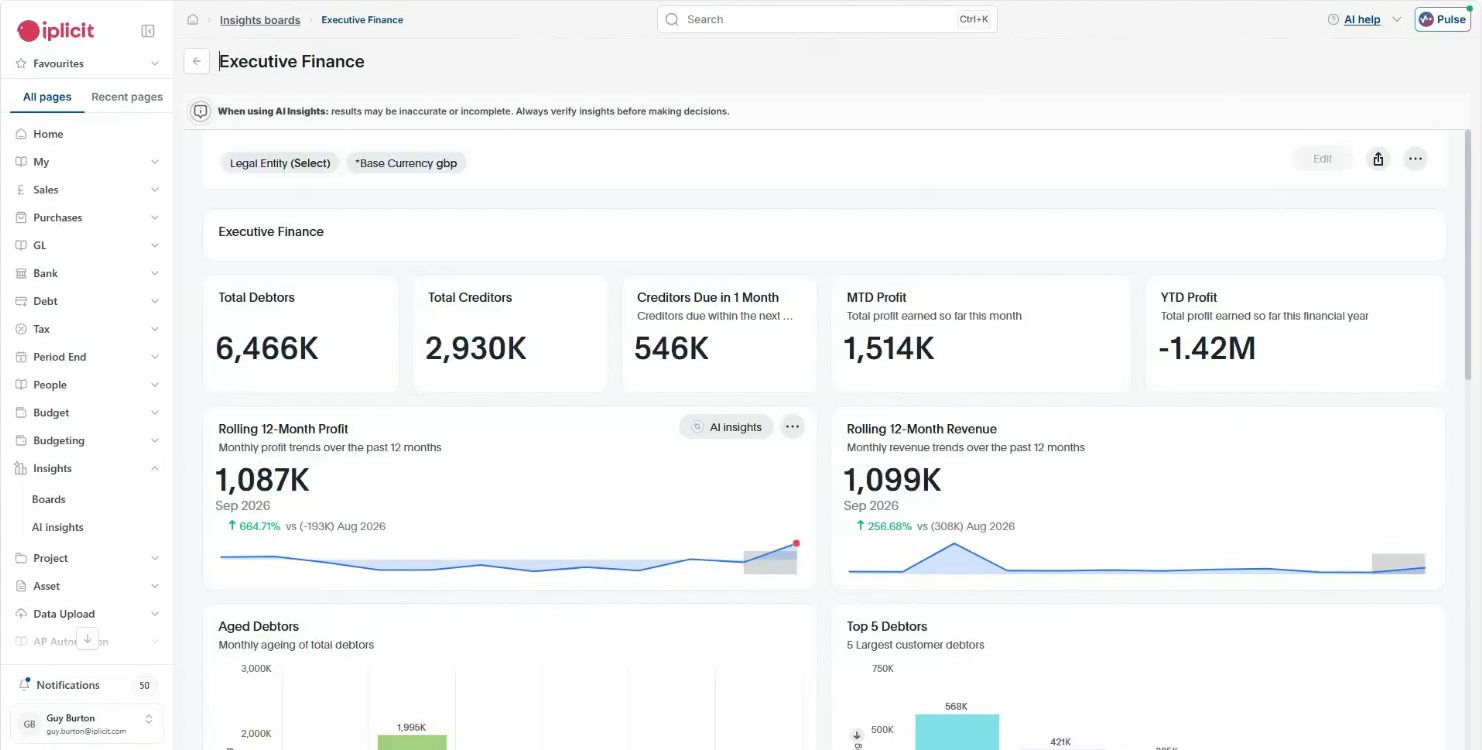
Fund tracking on iplicit uses flexible user-defined dimensions. You can tag transactions by fund, project, cost centre, donor, grant, or any other category, then report across these dimensions in any combination. This is particularly useful for charities managing complex funding arrangements, like Health Poverty Action, which needed to track spending by country, project, and donor across 16 countries.
For UK charities, iplicit runs restricted, unrestricted and designated funds as standard and produces SOFA-aligned reports. It also handles partial VAT recovery and automates bank reconciliation to keep daily bookkeeping current, so you don’t have to scramble at month-end.
If your charity runs multiple entities, you can use iplicit’s group accounting and consolidation tools to consolidate accounts without wrangling spreadsheets.
The difference iplicit makes to fund accounting is clear from Walking With The Wounded. Its month-end close used to take, in the Head of Finance’s words, “literally all month”. By its second month-end on iplicit, the charity had closed its books by working day six.
“iplicit has saved us at least 15 days each month.”
Marc Brady, Head of Finance, Walking With The Wounded
Key features
- Flexible dimensions: Tag every transaction with fund, project, cost centre, donor, and more. Report on any combination without restructuring your chart of accounts.
- SOFA-aligned reporting: Produce SOFA-aligned reports, with restricted, unrestricted and designated funds run as standard.
- Multi-entity consolidation: Consolidate accounts across charity entities, branches, or subsidiaries in one platform. Intercompany is handled in the system, with eliminations handled for you.
- Partial VAT recovery: Handle partial exemption calculations in the system, not in a separate spreadsheet.
- Approval workflows: Route purchase orders, invoices, and journals through configurable approval chains before anything is posted.
- Detect: Included as standard, Detect flags unusual transactions so your team can review them before they become problems. AI detects. You decide.
- Integrations: Connect to other systems through the iplicit integration ecosystem.
Pricing
iplicit uses transparent subscription pricing that scales with your users and entities, with fund accounting, multi-entity and multi-currency capability included rather than sold as extra modules. Book a demo or take a quick tour to see the platform and discuss pricing.
Pros
- Fund accounting is native to the ledger, not an add-on.
- Flexible dimensions give charities reporting flexibility that fixed-field systems can’t match.
- Strong implementation support and a dedicated nonprofit toolkit for charities switching systems.
Cons
- Very small charities with simple needs may find lighter tools like Xero sufficient.
- Budgeting and FP&A depth is lighter than a dedicated planning tool.
2. Xledger
Best for: International nonprofits that want cloud ERP with built-in fund and grant accounting.
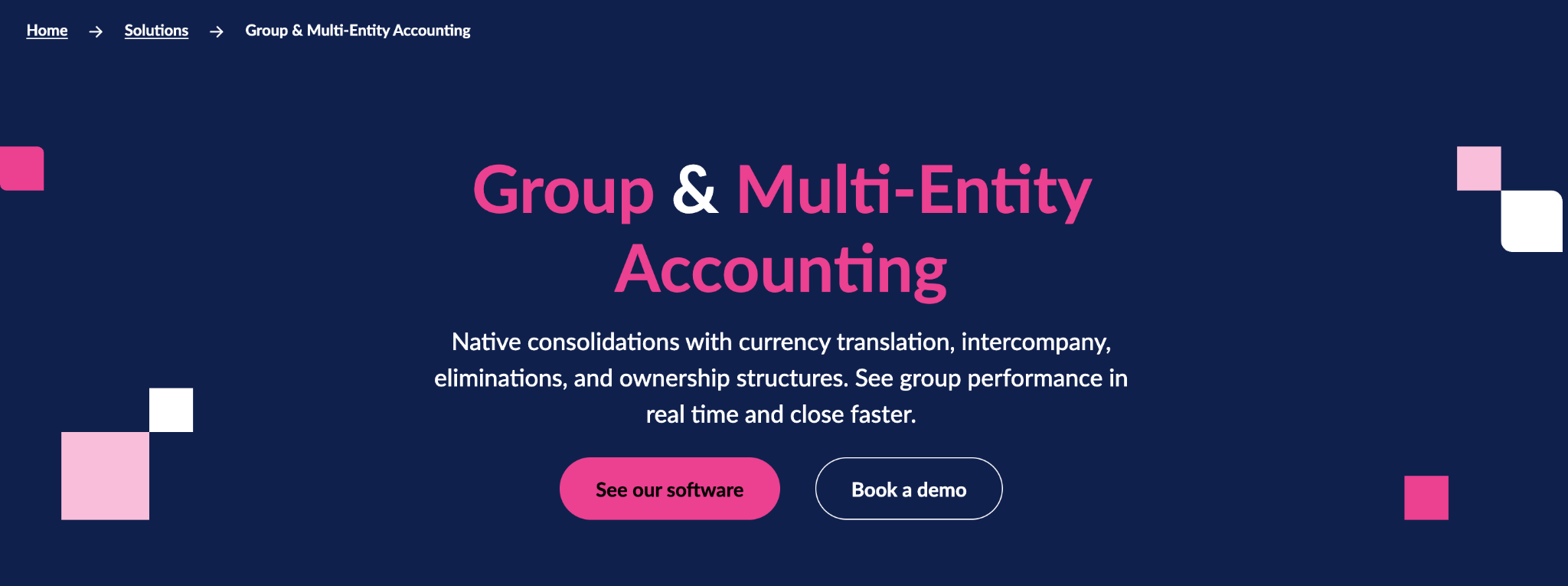
Xledger is a cloud ERP with a strong nonprofit presence across Europe and the UK. It offers fund and grant accounting as part of a broader finance suite that also covers procurement, fixed assets, and project accounting.
Xledger is built for organisations operating across multiple countries, making it a potential fit for international charities that need multi-currency consolidation. Xledger uses a dimension-based approach, allowing you to tag transactions by fund, project, department, and other categories.
For UK charities, Xledger offers charity-specific reporting and supports Charities SORP requirements. It also handles multi-currency accounting natively, which is useful if your charity receives grants or runs programmes across different countries.
Key features
- Fund and grant accounting: Track restricted, unrestricted, and designated funds as core ledger dimensions with income and expenditure reporting provided per fund.
- Multi-currency consolidation: Consolidate across entities in different currencies.
- Automated workflows: Route approvals, matching, and postings through configurable rules.
- Built-in procurement: Manage purchase orders, supplier invoices, and three-way matching in the same platform.
Pricing
Xledger doesn’t publish pricing publicly. You need to contact their sales team for a custom quote.
Pros
- Strong multi-currency and multi-entity capabilities for international charities.
- Fund and grant tracking is built into the core ledger.
Cons
- Pricing isn’t published, so you need a quote to compare costs
- It has a relatively small review base (30 reviews on Capterra), making independent comparisons harder.
3. Liberty Accounts
Best for: Smaller UK charities that want a low-cost, SORP-ready ledger.
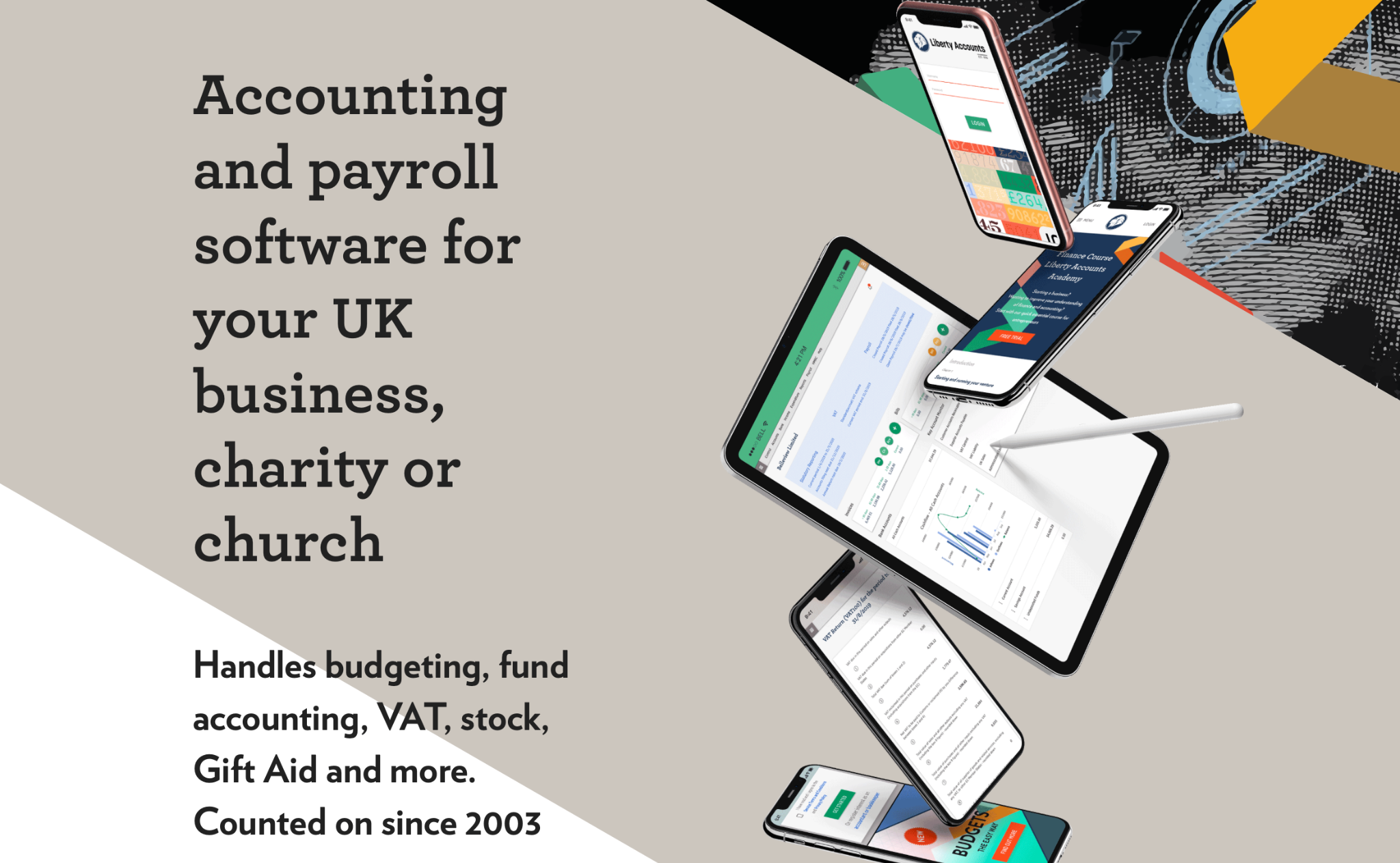
Liberty Accounts is a UK-built online accounting package for smaller charities, churches and not-for-profit organisations. It is one of the few affordable tools that offers fund accounting and SOFA reporting as a core feature.
Liberty Accounts comes with a donor ledger for Gift Aid tracking, fund-level reporting with SOFA output, and basic payroll. For a small UK charity that needs SORP-compliant accounts without the cost of a larger system, it meets those requirements well.
Key features
- SOFA report output: Produce a SOFA that meets Charities SORP requirements, directly from the ledger.
- Fund tracking: Separate restricted, unrestricted and designated funds with income and expenditure reporting per fund.
- Donor ledger and Gift Aid: Track donors and manage Gift Aid claims within the platform.
- Built-in payroll: Run basic UK payroll without a separate tool, including RTI submissions to HMRC.
Pricing
Plans start at £14.95 per month plus VAT. There is a free trial and a six-month money-back guarantee if the platform does not meet your needs within 6 months of your initial subscription.
Pros
- Very affordable.
- SOFA and fund tracking are built in, not bolted on.
Cons
- It's built for smaller organisations, so it lacks some features growing charities need, including multi-entity accounting, consolidation, and dimension-based reporting.
- It has a very small user review base (just 1 review on G2), making independent validation difficult.
4. Sage Intacct
Best for: Larger charities with complex reporting needs.
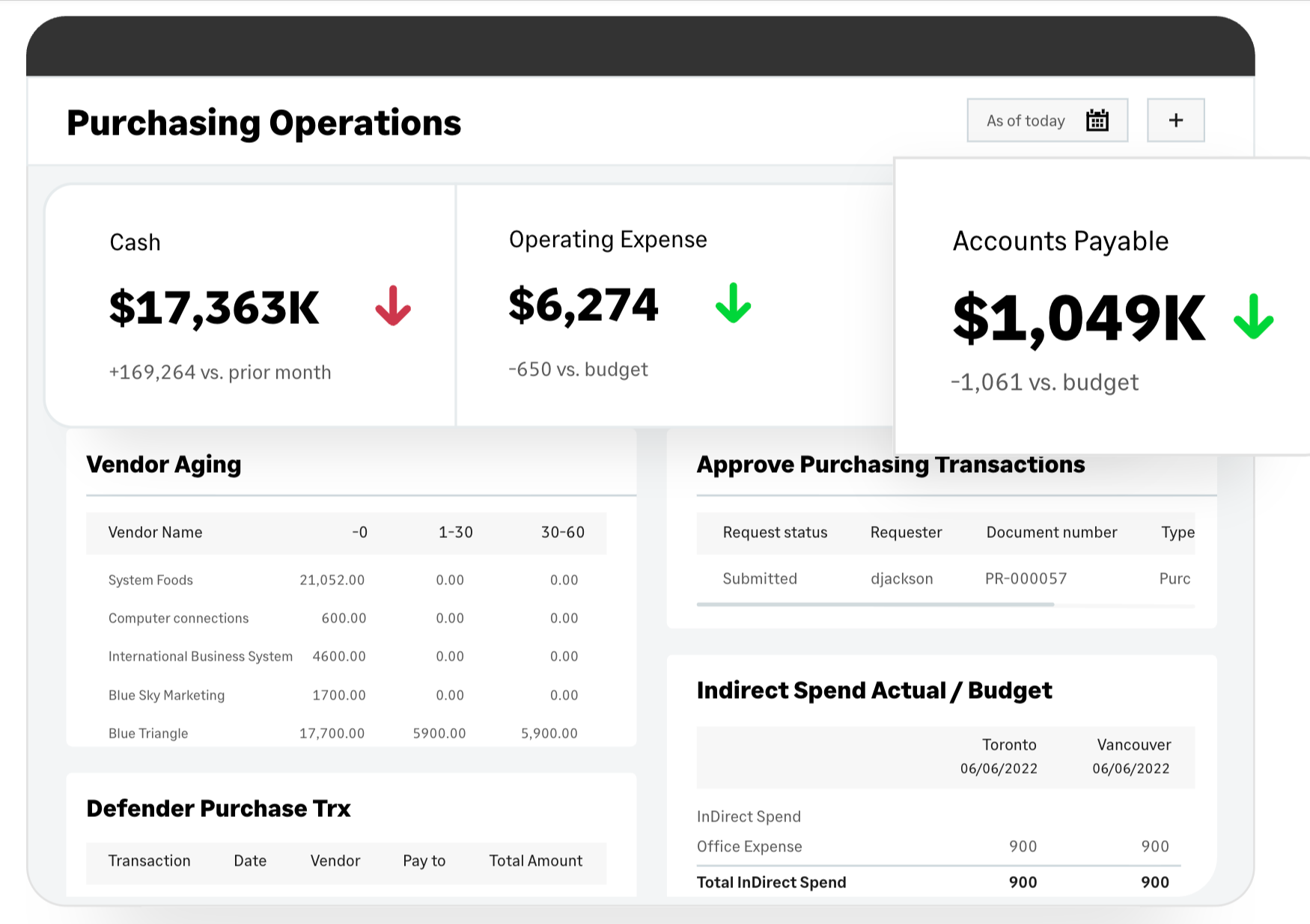
Sage Intacct is a cloud financial management platform used by charities and nonprofits worldwide, including a growing number in the UK. Its dedicated nonprofit edition includes fund accounting, grant management, and outcomes tracking.
Sage Intacct’s strength is its reporting depth. It uses a multi-dimensional ledger that lets you tag transactions by fund, grant, programme and location, then build reports across those dimensions without relying on spreadsheets. It also offers statistical journals for tracking non-financial metrics, which is useful for charities that report outcomes to funders.
For small to mid-sized UK charities, the main limitations are cost and implementation. Sage Intacct pricing starts from £1,200 per month, and implementation runs through Sage or a partner.
Key features
- Multi-dimensional general ledger: Tag transactions by fund, grant, programme, department and location, with reporting across any combination.
- Grant and contract management: Track grant budgets, drawdowns and compliance requirements in the platform.
- Nonprofit-specific dashboards: Pre-built dashboards for fund balances, grant burn rates and programme spending.
- Statistical accounts: Track non-financial outcomes alongside financial data.
Pricing
Sage Intacct pricing starts from £1,200 per month, excluding VAT. You get a tailored quote after you contact their sales team.
Pros
- Deep reporting capabilities for complex multi-entity charities.
- Large user base and extensive integrations
Cons
- Implementation runs through Sage or a reseller partner.
- Pricing starts from £1,200 per month, excluding VAT, which puts it out of reach for many small charities.
5. Access Financials
Best for: Charities already in The Access Group ecosystem.
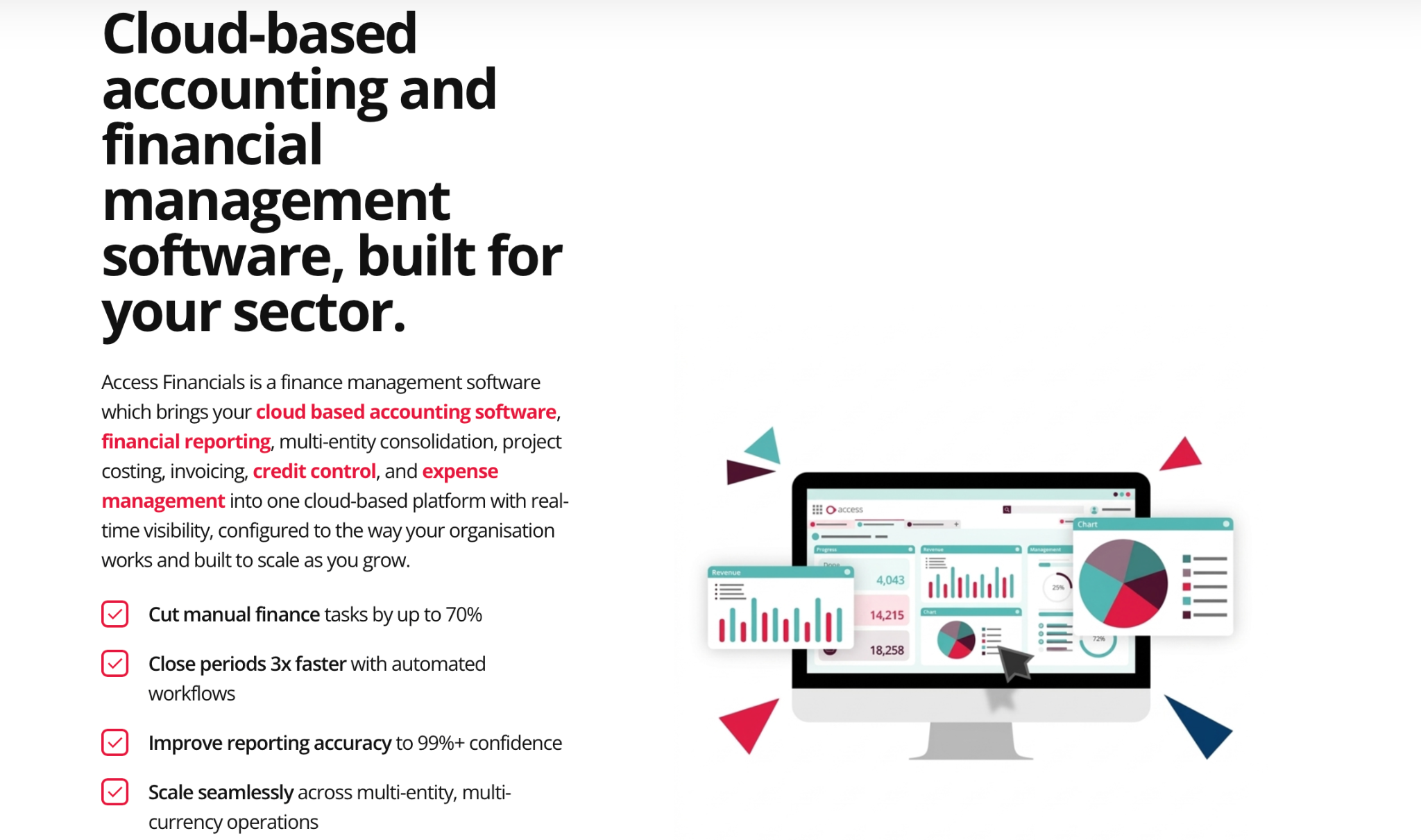
Access Financials is The Access Group's cloud accounting platform. The group has a well-established charity division, and Access Financials includes fund accounting for organisations that need it.
The finance platform sits within a wider ecosystem of Access products that covers HR, payroll, CRM and fundraising. For charities already using other Access tools, this helps connect financial data with the rest of their operations. Access Financials supports fund tracking, cost allocation, and the reporting required by charity auditors.
Key features
- Fund accounting: Track restricted, unrestricted, and designated funds with fund-level reporting and cost allocations.
- Access ecosystem integration: Connect to Access People (HR and payroll), Access Thankq (fundraising CRM), and other Access products.
- Budget management: Set and monitor budgets at the fund, project and cost-centre level.
- Cloud-based dashboards: Dashboards for trustees and senior management, accessible from any browser.
Pricing
Access publishes a starting price of £10,508 per year for a company with 40 employees. Every customer gets a custom quote.
Pros
- Gives you access to a strong ecosystem if you are already using other Access products.
- Established presence in the UK charity sector.
Cons
- Only a starting price is published, so the full cost needs a custom quote.
- It has a small independent review base (20 reviews on G2).
6. Blackbaud Financial Edge NXT
Best for: Charities with Blackbaud fundraising tools wanting one vendor.
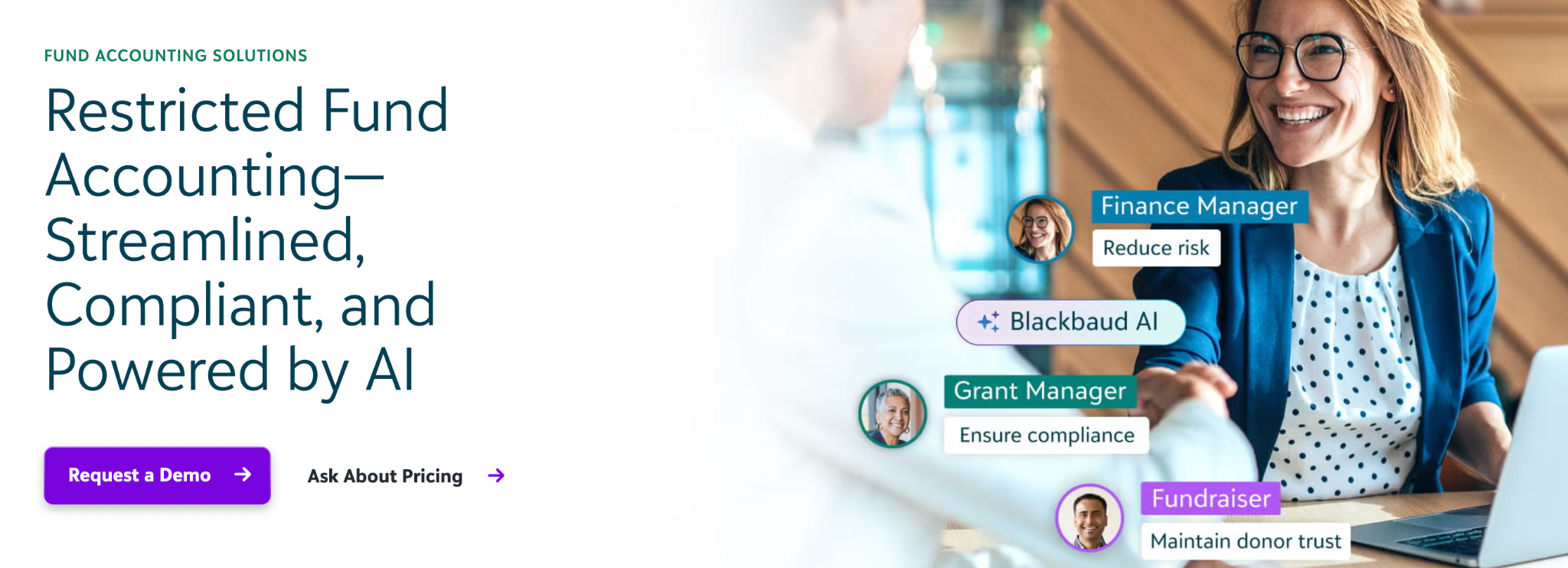
Blackbaud Financial Edge NXT is a fund accounting platform from Blackbaud, one of the largest nonprofit technology providers globally. It’s best known in the US, where it’s widely used by nonprofits and educational institutions.
Financial Edge NXT offers core fund accounting features, including restricted and unrestricted fund tracking, grant billing, and project accounting.
The main drawback is Charities SORP compliance. Blackbaud is best known in the US, so you’ll need to independently confirm during evaluation that its reports meet your Charities SORP (FRS 102) requirements.
Financial Edge NXT is likely to be most relevant for organisations already using Blackbaud’s fundraising and CRM tools, like Raiser’s Edge NXT, and want to keep their systems with one vendor.
Key features
- Fund accounting: Track restricted, unrestricted, and temporarily restricted funds with fund-level balance sheets and reporting.
- Grant billing and compliance: Manage grant budgets, track drawdowns, and produce funder reports.
- Project accounting: Track costs and revenue by project across multiple funds.
- Blackbaud ecosystem integration: Connect to Raiser’s Edge NXT, Luminate Online, and other Blackbaud fundraising tools.
Pricing
Blackbaud doesn’t publish general pricing. Contact their sales team for a bespoke quote.
Pros
- Deep fund accounting, especially for organisations with a US nonprofit background.
- Strong integration with Blackbaud’s fundraising and donor management tools.
Cons
- UK charities should verify SORP reporting outputs during evaluation.
- Pricing isn’t published, so you need a quote
7. AccountsIQ
Best for: Multi-entity nonprofits that need automated consolidation on a mid-market budget.
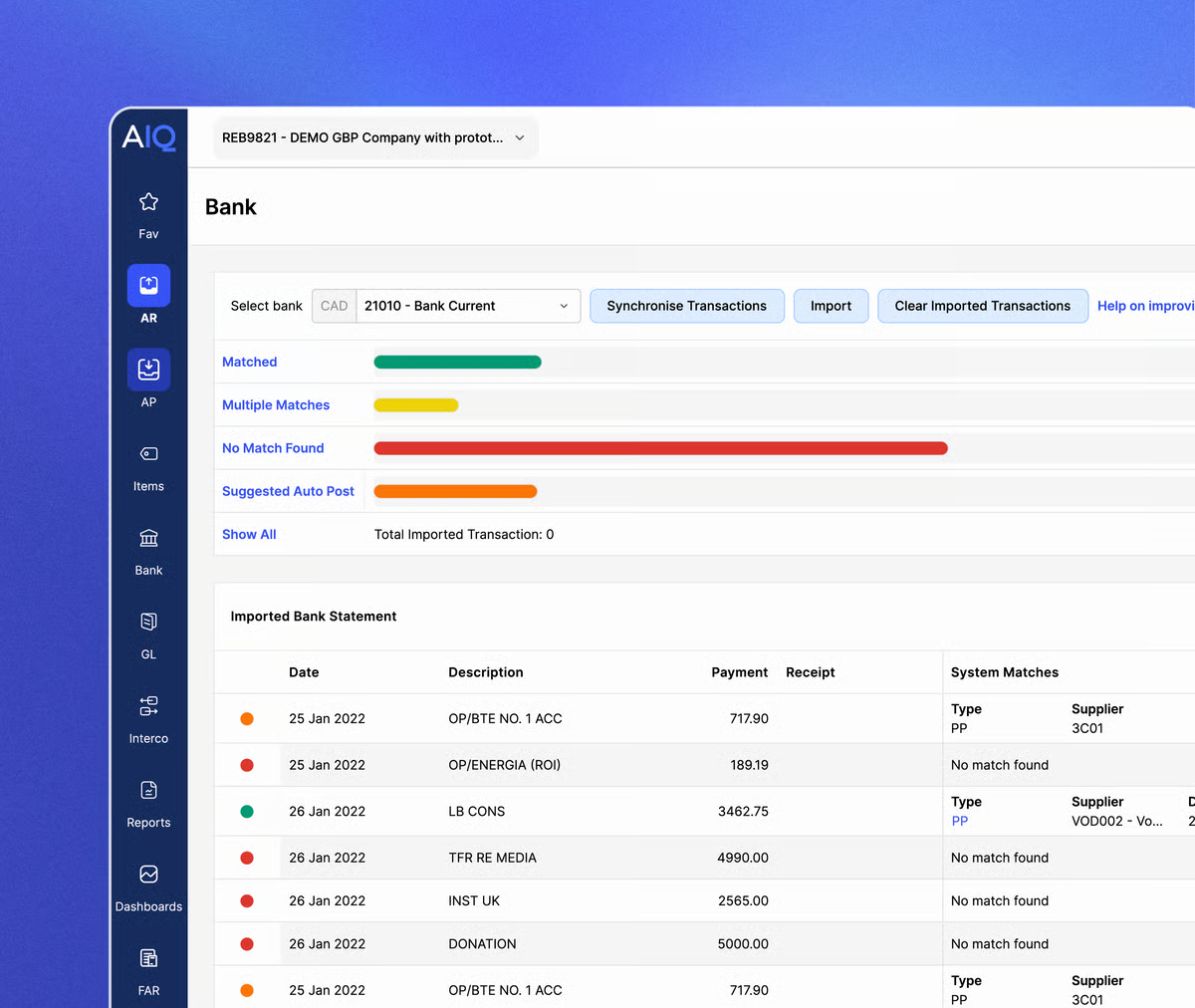
AccountsIQ is a cloud accounting platform built in Dublin, with a focus on multi-entity organisations. It's popular with nonprofits across the UK and Ireland, particularly those that need to consolidate accounts across subsidiaries, branches or group entities.
AccountsIQ supports fund accounting through its dimension- and class-based coding structure and provides the reporting outputs UK charities need. Its standout feature is automated consolidation, which allows you to consolidate accounts across entities with different currencies in just a few clicks.
For mid-sized charities that have outgrown Xero but don’t need a full ERP like Sage Intacct, AccountsIQ serves as a useful middle-tier option.
Key features
- Multi-entity consolidation: Consolidate across subsidiaries, branches, and group entities with automated intercompany eliminations.
- Dimension-based fund tracking: Use dimensions to separate restricted, unrestricted, and designated funds across transactions and reports.
- Approval workflows: Route purchase orders and invoices through configurable approval chains.
- Real-time dashboards: Configurable dashboards for trustees and management, accessible from any browser.
Pricing
AccountsIQ’s pricing starts from €275 per month for the single-entity Core plan, and your custom quote is tailored to your organisation’s size and entity count.
Pros
- Strong multi-entity consolidation at a mid-market price point.
- Fair independent review profile (114 reviews on G2)
Cons
- Fund accounting relies on dimensions rather than a dedicated module, so charity-specific reporting may require additional setup.
- The Core plan covers a single entity, so multi-entity charities need a higher tier.
8. Xero
Best for: Very small charities with simple fund structures.

Xero is one of the most widely used cloud accounting platforms among small UK organisations. Many small charities start with it because it’s affordable, easy to learn, and familiar to their accountant.
However, Xero doesn’t offer native fund accounting. It can’t separately track restricted and unrestricted funds in the ledger, produce a SOFA, or generate SORP-specific reports. Charities that use it for fund accounting have to work around these gaps with tracking categories (Xero’s term for cost-centre tags), manual journals, and a year-end SOFA assembled in a spreadsheet.
For a very small charity with just one or two restricted funds, this workaround may be manageable. But as funding arrangements become more complex, the manual work quickly adds up.
Key features
- Tracking categories: Tag transactions by up to two dimensions (for example, fund and project) for basic fund-level reporting.
- Bank feeds and reconciliation: Automated bank feeds from most UK banks, with rule-based matching.
- App ecosystem: A large marketplace of third-party apps, including tools that add reporting on top of Xero.
- Making Tax Digital: MTD for VAT is supported natively.
Pricing
The Ignite plan costs £18 per month. Grow costs £39, Comprehensive £55 and Ultimate £70 per month, all excluding VAT.
Pros
- Very affordable and easy to learn.
- Huge accountant network and app ecosystem in the UK.
Cons
- Fund accounting, SOFA output, and SORP reporting have to be managed through workarounds and spreadsheets.
- Tracking categories are limited to two dimensions, which is not enough for charities with complex fund structures.
How to choose the right fund accounting software
Choose by evaluating each software against your charity’s size and complexity.
If you manage one or two restricted funds within a single entity, a light tool should be enough. But if you run multiple entities, receive institutional grants and report to several funders with different requirements, you’ll need dedicated fund accounting software built to handle that complexity, like iplicit.
What to do next
By now, you should have a clearer idea of which tool's features match your charity’s needs. But before committing, request a demo using your actual funding arrangements and reporting requirements. That way, you can see how the software handles your day-to-day accounting.
And if you’re managing multiple funds or entities and iplicit looks like the right fit, book a demo, and we’ll show you how it handles fund accounting, consolidation, and group reporting. You can also take the Quick Tour to explore the platform at your own pace.
Still unsure what your charity needs? Our guide to choosing the right finance system for your charity walks you through the key factors to consider, from your reporting requirements and existing systems to the features you’ll need as your organisation grows.
What is the Charities SORP?
What is the Charities SORP?
The Charities SORP (Statement of Recommended Practice) is the reporting framework that tells UK charities how to prepare their annual accounts. It sets out the format for the SOFA, the balance sheet, and the notes that accompany the trustees’ annual report. The current version is based on FRS 102. A new edition (SORP 2026) applies to accounting periods starting on or after 1 January 2026, and SORP 2019 still applies to earlier periods.
Do all accounting tools handle restricted funds properly?
Do all accounting tools handle restricted funds properly?
No. Many general-purpose platforms treat fund tracking as an optional tag. That means restricted funds aren’t truly ring-fenced in the ledger. If your charity receives restricted grants, you need dedicated fund accounting software that separates funds at the ledger level and stops restricted money from being mixed with unrestricted funds.
Can Xero do fund accounting for a charity?
Can Xero do fund accounting for a charity?
Xero doesn’t have native fund accounting. Charities that use it work around this limitation with tracking categories and manual journals, then rebuild the SOFA in a spreadsheet. That manual workaround often works for very small charities with simple structures, but it gets time-consuming as charity complexity grows. If you need to manage and track more than one or two restricted funds, choose a purpose-built tool like iplicit instead of Xero to save your finance team time.
What is the difference between fund accounting and commercial accounting?
What is the difference between fund accounting and commercial accounting?
Commercial accounting tracks income and expenses to measure profit. Fund accounting tracks them by the restrictions the donor placed on the money.
Does my charity need Making Tax Digital-compatible software?
Does my charity need Making Tax Digital-compatible software?
If your charity is VAT-registered, you’re required to file returns through MTD-compatible software. Most tools on this list support MTD for VAT, so confirm it with the vendor during evaluation. The bigger consideration is which software handles partial VAT recovery, since many charities can only reclaim part of the VAT they pay.