A grant report proves to a funder that their money did what it was meant to do. This guide sets out five practices for accurate, granular, transparent grant and fund reporting – understanding what funders want, recording data at a granular level, reviewing it regularly, reporting honestly on wins and setbacks, and automating the process – and shows how automation can cut the time it takes.
The short version
- A grant report is an update on a funded project's progress, spending and outcomes – and funders use it to decide whether to keep supporting you.
- Vague or late reporting is a risk. Some funders check filing history and will hold back grants over it.
- Reporting at a granular level, against specific dimensions, makes your figures easier to trust and easier to reuse in future funding bids.
- Reviewing your data on a regular cycle, not just at deadline, catches errors before your funder does.
- Automating grant reporting frees up finance teams' time and money that can go back into the cause itself.
A grant report is a progress update a charity sends to a funder, covering what was achieved, what went wrong and how the money was spent.
Funders use it to check a grant is working as intended, and charities use it to build the case for further support.
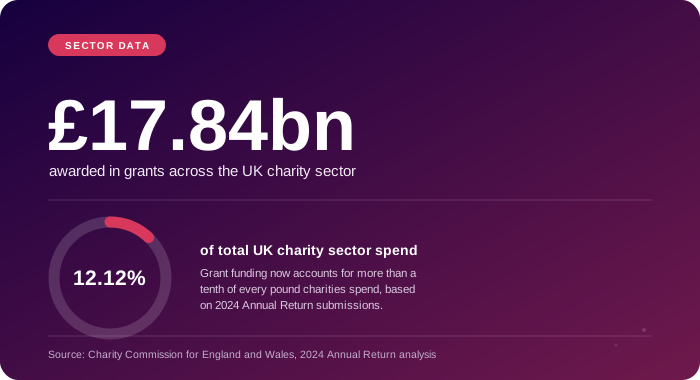
When a report is vague or late, funders notice. According to the Charity Commission, grant-making charities awarded £17.84billion in grants in the period covered by its 2024 Annual Return analysis – 12.12% of the whole charity sector's gross expenditure. That scale of giving depends on funders trusting the reports they get back. These five practices help charities write reports that hold up to that scrutiny and keep the funding coming.
What is a grant report?
A grant report is a written update that a grantee sends to a funder during or at the end of a funded project. It sets out what the money achieved, including any accomplishments and setbacks, and usually includes a breakdown of how the funds were spent. For a charity providing school meals, for example, a grant report might state how many meals were served and how many children benefited, matched against the outcome the funder expected.
The report is also a financial document. It typically covers how the grant was spent and whether progress was made against the project's original goals. For both funder and grantee, it's the main accountability tool that shows a scheme is proceeding as planned.
Why grant reporting is vital
A grant report that is accurate and specific protects a charity's funding. A vague or incomplete one puts it at risk. If a funder cannot see how their money was used, or whether it met the outcome they were funding, they have grounds to reduce, delay or withdraw support. Some funders will even withhold the remaining grant if an interim report misses its deadline.
Your project might excel in areas your funder never asked about but that won't necessarily help you. Serving lunches to 100 children, for example, won't satisfy a funder if you can't prove the meals reached the specific group they defined. A well-written, accurate report gives them what they need to justify continuing their support and can even help you secure further grants down the line.
Five best practices for grant and fund reporting
Good grant reporting comes down to five habits. You need to know exactly what the funder wants to see, record activity and spending at a granular level, review data on a regular cycle rather than at the deadline, report honestly on both wins and setbacks, and use automation to cut the manual workload. Each is explained below.
1. Understand exactly what your funder wants to see
When you're working with a grant, you need to prove the money is being used as intended. That means every stakeholder should have a clear, shared understanding of the fund's objectives and strategy, so progress gets communicated in a way that speaks to those specific goals.
Some funders will withhold the rest of a grant if initial reporting misses a deadline. Clarify exactly what's needed, and when, so your funder can satisfy their own audits and keep supporting you.
2. Record activities and spending at a granular level
The more detail you can offer a funder, the better you satisfy their requests, and the stronger your case for future funding bids. Attaching data to specific dimensions, such as projects, funds, resources and time allocation, shows more clearly how a grant makes an impact.
The more dimensions you report against, the easier it is to bring context to your figures, and the simpler it is to categorise, filter and combine them later. Gathering data at this level takes time, especially if it's done manually. Finance software built for this kind of detailed grant reporting can make the difference.
3. Review your data on a regular cycle
Rushing to build a grant report at the last minute leads to stress and mistakes. It won't do your project justice, and it won't give your funder confidence either.
Gathering and reviewing your data regularly helps you stay on top of a fund's performance, so you can spot errors or operational issues quickly. You don't want your funder to spot a problem before you do. Regular reporting also helps you catch patterns that point to future wins.
4. Report on both the wins and the setbacks
It's tempting to use a grant report purely to highlight the good work you've done and there's a place for that. But don't gloss over the negative findings.
Data only becomes insight once you evaluate it fully – and that means covering the lessons alongside the successes. If your report shows a positive impact but also flags further work to be done, that's often an opening to seek additional funding, not a reason to hide the gap.
5. Automate your reporting
Pulling the data you need from spreadsheets by hand is time-consuming and if a funder needs regular reports, it gets expensive fast. Think about how many hours a finance team spends on that kind of detail-heavy, manual work.
Technology that automates your reporting will allow your team to spend more time running the fund itself – and will free up money that can go straight back into your organisation's work.
Where iplicit fits
Grant and fund reporting is easiest when the underlying finance system is built for it, not bolted onto one. iplicit is cloud accounting software for charities and nonprofits, with fund accounting, unlimited reporting dimensions and built-in SORP 2015 (FRS102) and SOFA reporting, so the detail funders ask for is there without extra manual work.
“With our old system, each donor report would take three weeks to produce. With iplicit, if all data has been entered correctly, a report can be done in less than two days.” Sandra Tcheumeni Boschet, Director of Finance and Operations, Health Poverty Action
With iplicit, charities can:
- Report on unlimited data dimensions, segmenting data by project, fund, resource or time allocation to cover every element a funder needs to see.
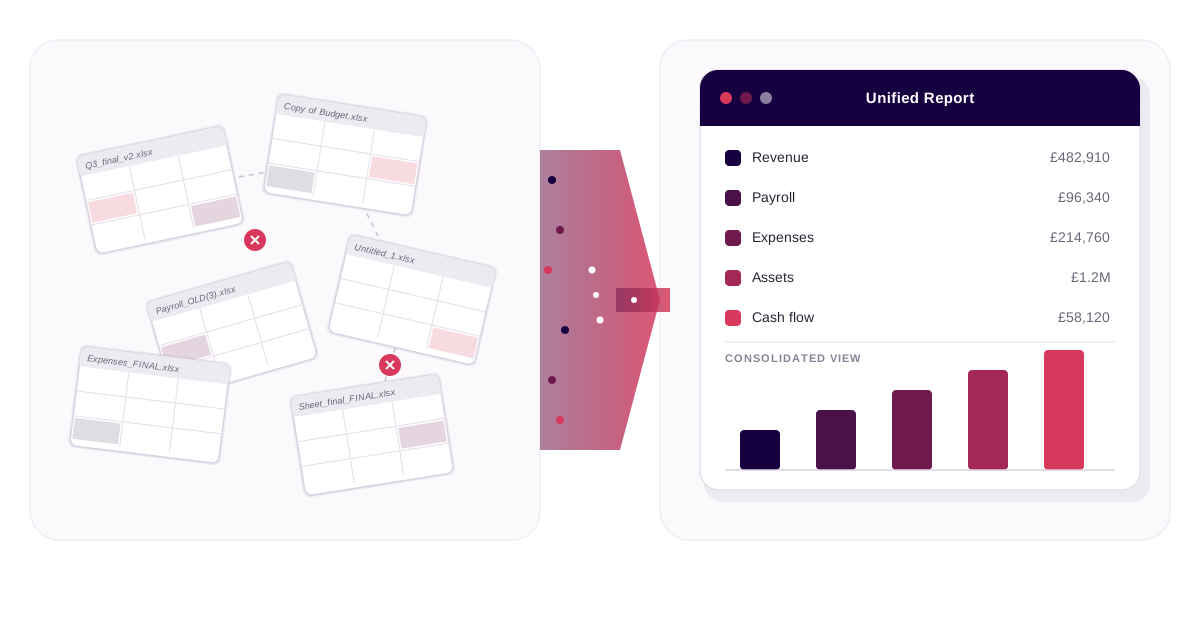
- Consolidate across subsidiaries and entities in real time, with automatic intercompany posting and eliminations, so figures don't need rekeying.
- Build financial reporting dashboards with summary charts and overviews for any part of a fund's performance, so the right data is there when it's needed.
- Use ready-made or custom reports, including SORP 2015 (FRS102) and SOFA reporting.
- Automate routine reporting work, so skilled finance teams spend their time where it matters most.
The bottom line
A grant report is only as useful as the trust it builds. Get specific about what your funder wants, record your data at a granular level, review it regularly, report both the good and the bad, and automate what you can. Together, those five habits turn a compliance task into evidence that helps you win the next grant too.
See it for yourself
The best way to see what this looks like in practice is to try it. Take a 3-minute quick tour of iplicit, or book a demo to see grant and fund reporting in your own data. You can also visit our grant and fund reporting page for more detail on the features covered here.
What is a grant report?
What is a grant report?
A grant report is a written update a charity sends to a funder, covering what the grant achieved, any challenges faced, and how the money was spent. Funders use it to confirm the grant is meeting its intended outcome before releasing further funding.
What's the difference between a grant report and an impact report?
What's the difference between a grant report and an impact report?
A grant report focuses on a single grant and funder, covering spending and outcomes against that grant's specific terms. An impact report is broader, covering an organisation's overall effect across all its funding and activities, usually for trustees, donors, or the public.
Why do funders reduce or withhold funding over a grant report?
Why do funders reduce or withhold funding over a grant report?
Funders reduce or withhold funding when a report cannot show how the money was spent or whether it met the agreed outcome. Late or vague reporting also damages trust, making a funder less likely to approve further grants to the same charity.
How often should charities submit grant reports?
How often should charities submit grant reports?
This depends on the funder's terms, but many require reports at set milestones during the project as well as a final report at the end. Some withhold part of the grant until an interim report is received, so it pays to confirm the schedule upfront.