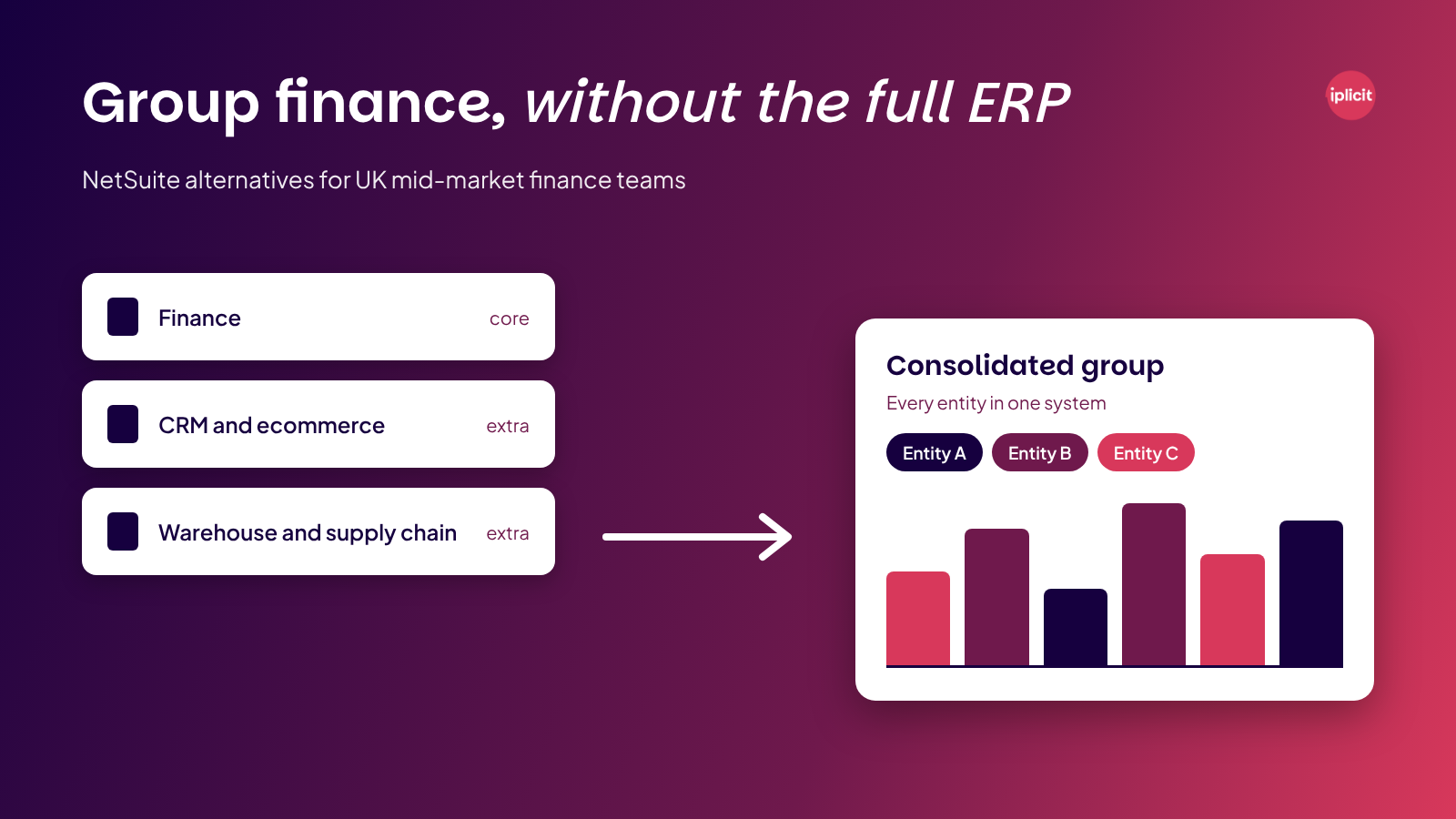
The best NetSuite alternatives for a UK mid-market group are iplicit, Sage Intacct and Acumatica, with Xledger, Business Central, Access Financials and AccountsIQ suited to specific needs. For NetSuite-style group consolidation without a full ERP, start with iplicit. For an established name and a modular platform, look at Sage Intacct. If you also run stock or manufacturing, Acumatica is a full ERP with unlimited users.
What a UK group needs from a NetSuite alternative
If you run a UK group, whether that's a charity with a trading arm, a property business with a few SPVs or a company that's just made an acquisition, you want every entity in one system. You want intercompany posted once, and group numbers you don't have to rebuild in Excel every month. NetSuite's answer to that is OneWorld, its multi-company edition.
The catch is that OneWorld comes inside a full ERP, and it's priced like one. NetSuite's annual licence is made up of the core platform, optional modules and the number of users. OneWorld itself is licensed on top of the core platform. So you end up paying for your group structure, and for a system built to run far more than your finance.
In this piece, we compare seven NetSuite alternatives for UK mid-market finance teams, so you can find one that fits your group.
Why listen to us?
Group consolidation across currencies is the work we're built around, and iplicit is one of the tools on this list. When SEP2 was opening entities in Ireland and the US, its CFO compared NetSuite and Sage Intacct before choosing iplicit. Health Poverty Action reports across several countries, so year-end used to mean consolidating project balance sheets from separate copies of QuickBooks. With iplicit, its team saved six weeks at year-end.
“Also, the timesaving we experience with iplicit is enormous! We are currently preparing our year-end process and already we are saving 6 weeks of our time consolidating the various project balance sheets from various Qbs versions. Just take Donor Reports as an example – it’s essential that we have transparency and can report back to Donors on how and where their funds have been spent. With our old system, each Donor report would take 3 weeks to produce, with iplicit if all data has been entered correctly, a report can be done in less than 2 days!”
Sandra Tcheumeni Boschet, Director of Finance & Operations, Health Poverty Action
Consolidation is probably what drew you to NetSuite in the first place, so it runs through every criterion we've used to judge the tools below.
What is NetSuite?
NetSuite is Oracle's cloud business management suite, which connects ERP and financials, CRM and ecommerce in one system. Your finance team runs the ledgers and month-end close in it, and your sales and warehouse teams can work off the same data.
Why seek alternatives to NetSuite?
For a mid-market UK group, three things make NetSuite hard to justify:
1. The licence grows with every module, user and new country
On top of the annual licence, NetSuite charges a one-time implementation fee. Because OneWorld is licensed on top, the bill also follows the shape of your group.
2. You're running an ERP when the job is group finance
If you're a charity group, an academy trust or an investment firm, you don't need warehouse management or ecommerce. But with NetSuite built as a full ERP, covering everything from accounting to supply chain and warehouse operations, some of those modules still come with the system. While that breadth is the point of an ERP, it's more system than you need to run your month-end intercompany and consolidation.
3. Running NetSuite well needs an administrator on staff
In NetSuite, key setup and data tasks sit with the Administrator role, and in a small finance team, only one person may have it. Oracle describes departments, classes and locations as classifications that Administrators use to organise your records, and you can add an unlimited number of custom segments on top. Only an Administrator can run the full CSV export, too.
7 best NetSuite alternatives
1. iplicit
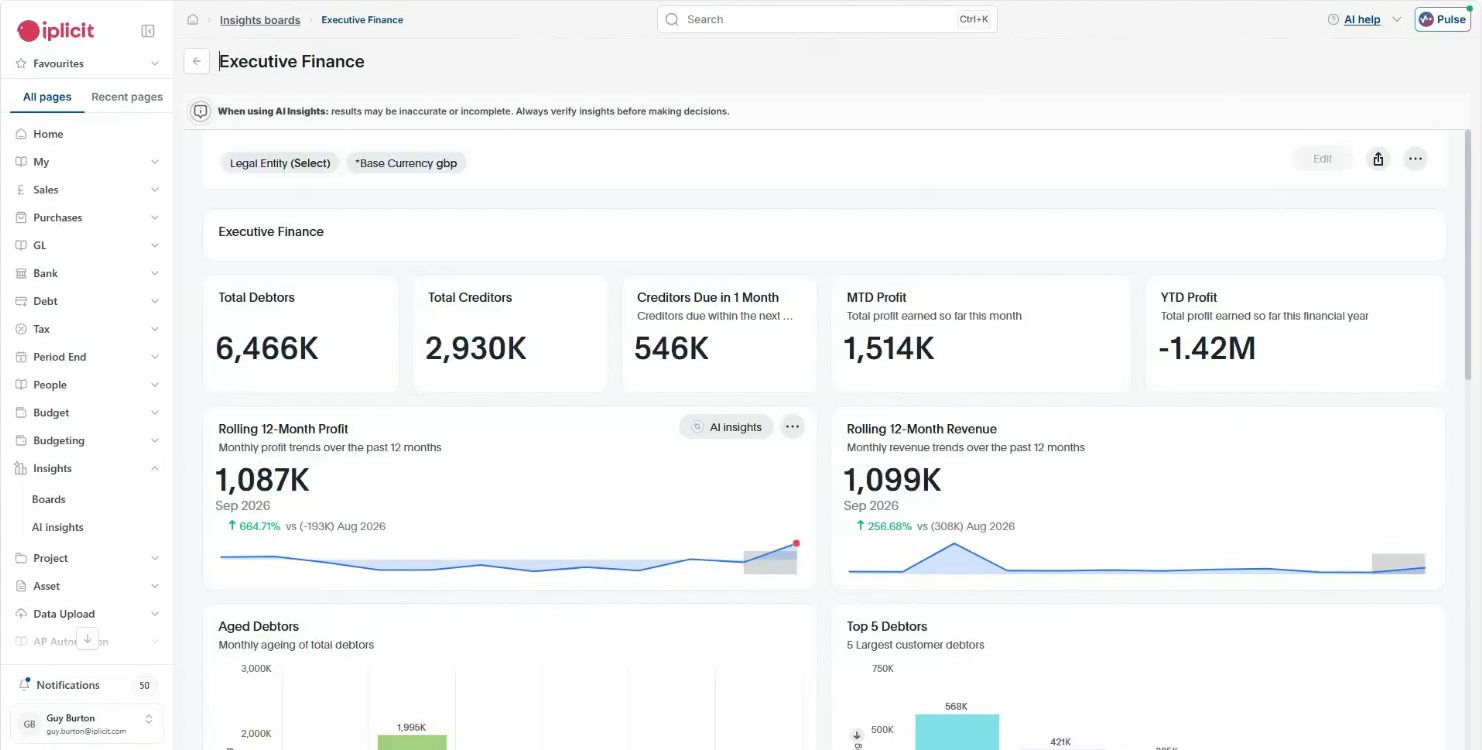
Built for UK mid-market organisations that have outgrown entry-level accounting, group finance sits at the centre of iplicit. All your entities are in one database, each with its own currency and tax authority, and transactions consolidate across entities and currencies in one system. Record an intercompany transaction once and iplicit creates the matching entry in the other entity, with eliminations handled for you, so month-end doesn't start with a spreadsheet.
Growing the group doesn't mean rebuilding anything, either. When Salterns Academy Trust added a new school, the process was straightforward and completed in only a few steps, with no need to rebuild the database.
Key features
- Group consolidation: Consolidate across entities and currencies in one system, with intercompany handled in the system and drill-down to the source transaction.
- Flexible reporting dimensions: Report by department, location, fund or project without exploding your chart of accounts.
- Month-end automation: Close faster, because accruals and prepayments run automatically and period-end FX revaluations happen in the system, instead of in a spreadsheet.
- Per-entity currency and tax: Run each company in its own currency and tax authority. Live exchange rates feed in automatically, and consolidated reports translate using closing, average or historic rates by account type, set up to match your group policy.
- Self-service reporting: Budget holders run their own reports, so your finance team isn't fielding every request.
- iPaaS connections: Connect your CRM or ecommerce tools through Zapier or Besyncly without a developer.
Pricing
iplicit offers transparent subscription pricing that scales with your users and entities, with fund accounting, multi-entity and multi-currency capability included rather than sold as extra modules.
Rating
Capterra rating: 4.6/5 (53 reviews).
Pros
- It's built around group finance, so you get group consolidation without running a full ERP to get it.
- Detect, included as standard, flags unusual transactions so your team can review them before they become problems.
- Your finance team can add companies and change the setup without a specialist, as Salterns Academy Trust found when it added a new school.
Cons
- Budgeting and forecasting are built in, but for in-depth FP&A or scenario modelling, you'd add a planning tool.
2. Sage Intacct
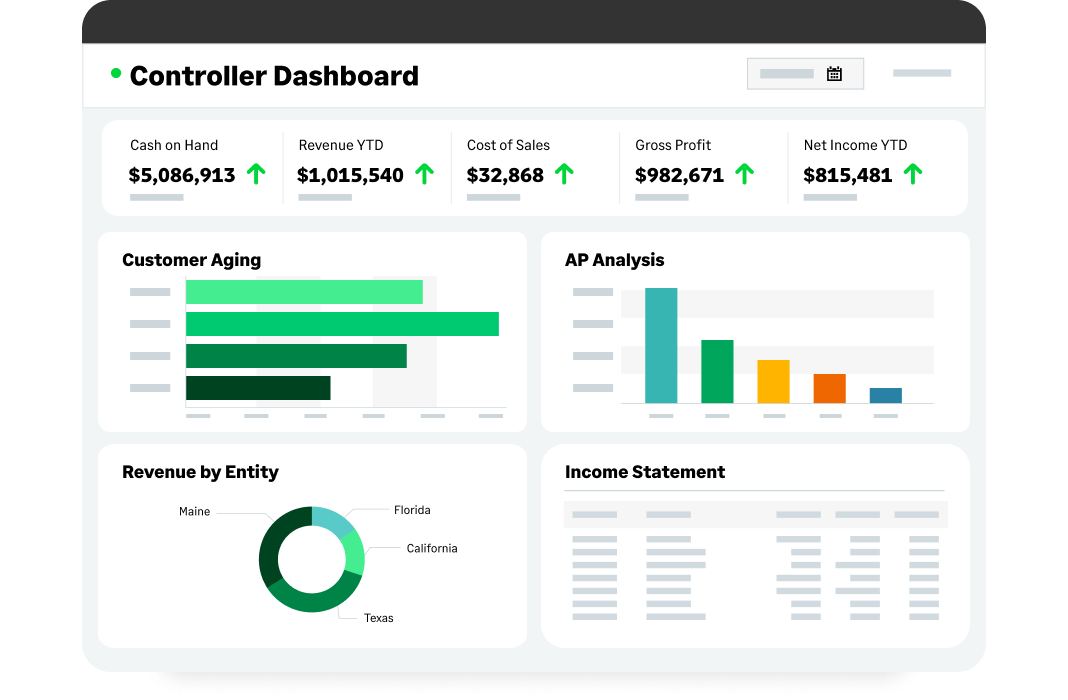
If you want an established name behind your finance system but don't need a full ERP, Sage Intacct is the nearest match to NetSuite on this list. It's Sage's cloud financials product, sold as a modular subscription.
Its multi-entity tools let a new entity inherit existing lists and charts of accounts, and you manage every entity from one login. It isn't the right pick if you want group finance without building up a list of modules.
Key features
- Multi Entity Insights: Switch between entity detail and an aggregated view across the group.
- Dimensions: Tag transactions and operational data with dimension values for reporting.
- Inter-entity setup: Set up due-to, due-from and settlement accounts centrally.
- Sage Copilot: Use Sage's AI assistant to automate routine tasks and surface insights from your data.
Pricing
You're looking at a starting price of £1,200 per month, excluding VAT, for Sage Intacct. That base subscription includes 3 full users and 1 employee 10-pack. Implementation, data migration and training are quoted separately.
Rating
Capterra rating: 4.3/5 (718 reviews).
Pros
- The base subscription already includes 3 full users and an employee 10-pack.
- New entities inherit lists and charts of accounts, so growing the group is quick.
- Industry modules and marketplace integrations let you extend it as the group changes.
Cons
- If you want planning, you'll need a separate product and separate user licences.
- Implementation, data migration and training aren't included in the £1,200 starting figure.
3. Acumatica
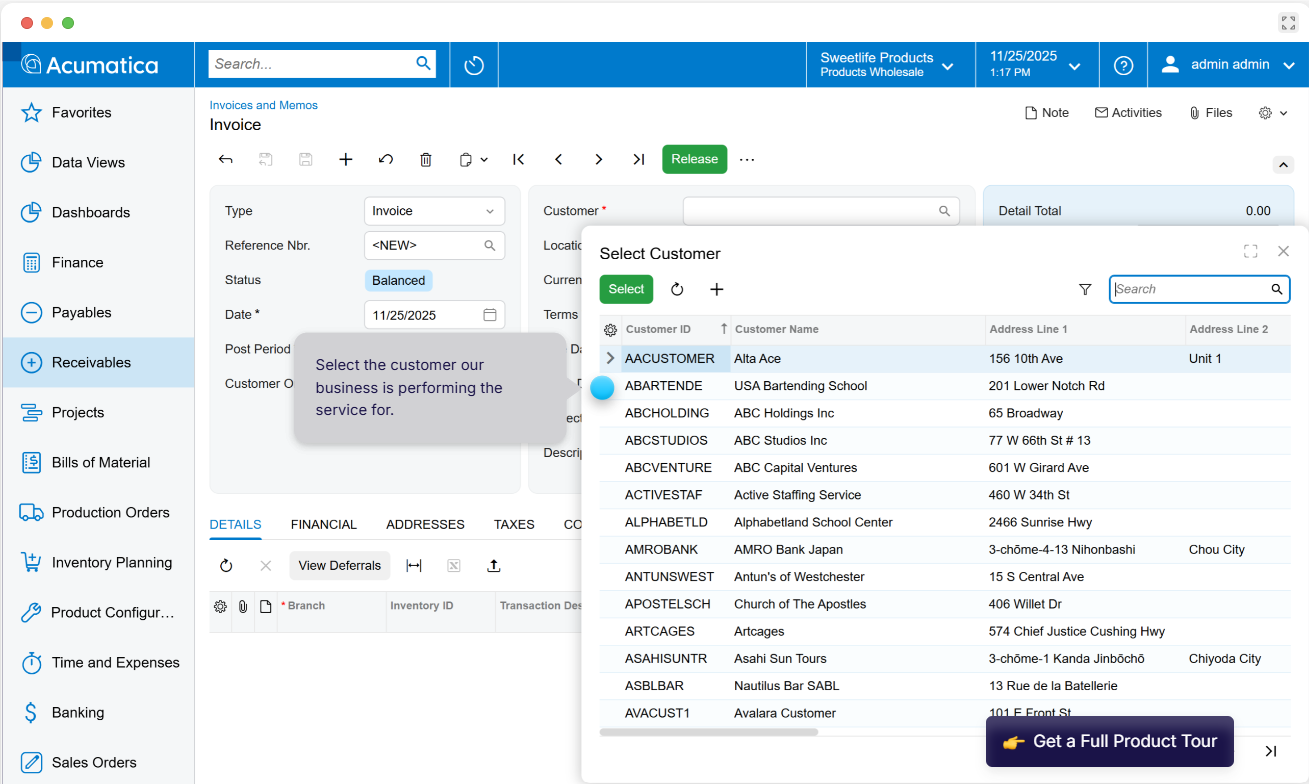
Acumatica is a cloud ERP with editions for manufacturing, distribution, construction and retail. Unlike iplicit or Sage Intacct, it's a full ERP, so it suits you if you still run stock and operations in one system.
And where NetSuite charges per user, Acumatica's users are unlimited, so your warehouse team, project managers and approvers can all have access without a seat count to manage. It isn't the right pick if you only want finance software, because you'd still be running and maintaining a full ERP.
Key features
- Shared settings: Run unlimited related companies in one environment, sharing charts of accounts, calendars and currencies.
- Intercompany transactions: Create due-to and due-from entries automatically, and eliminate intercompany transactions from consolidated reports.
- Multicurrency: Convert currencies automatically while keeping reporting accurate across entities.
- Making Tax Digital: Connect each company branch to HMRC for UK VAT returns.
- Industry editions: Add manufacturing, distribution, construction, retail, professional or field service on the same platform.
Pricing
Acumatica doesn't publish prices. You'll get a quote from a partner once they know which applications you want, how many transactions you expect and how you'd like it deployed.
Rating
Capterra rating: 4.4/5 (243 reviews).
Pros
- Bringing your budget holders and approvers into the system won't cost you extra seats the way NetSuite user licences do.
- Manufacturing and distribution editions cover operations a finance-only system can't.
- Company and branch access controls limit what each user sees.
Cons
- Resource levels and data storage are adjusted as your transactions grow, which can raise the cost.
- It's more system than you need if your problem is purely consolidation and reporting.
4. Xledger
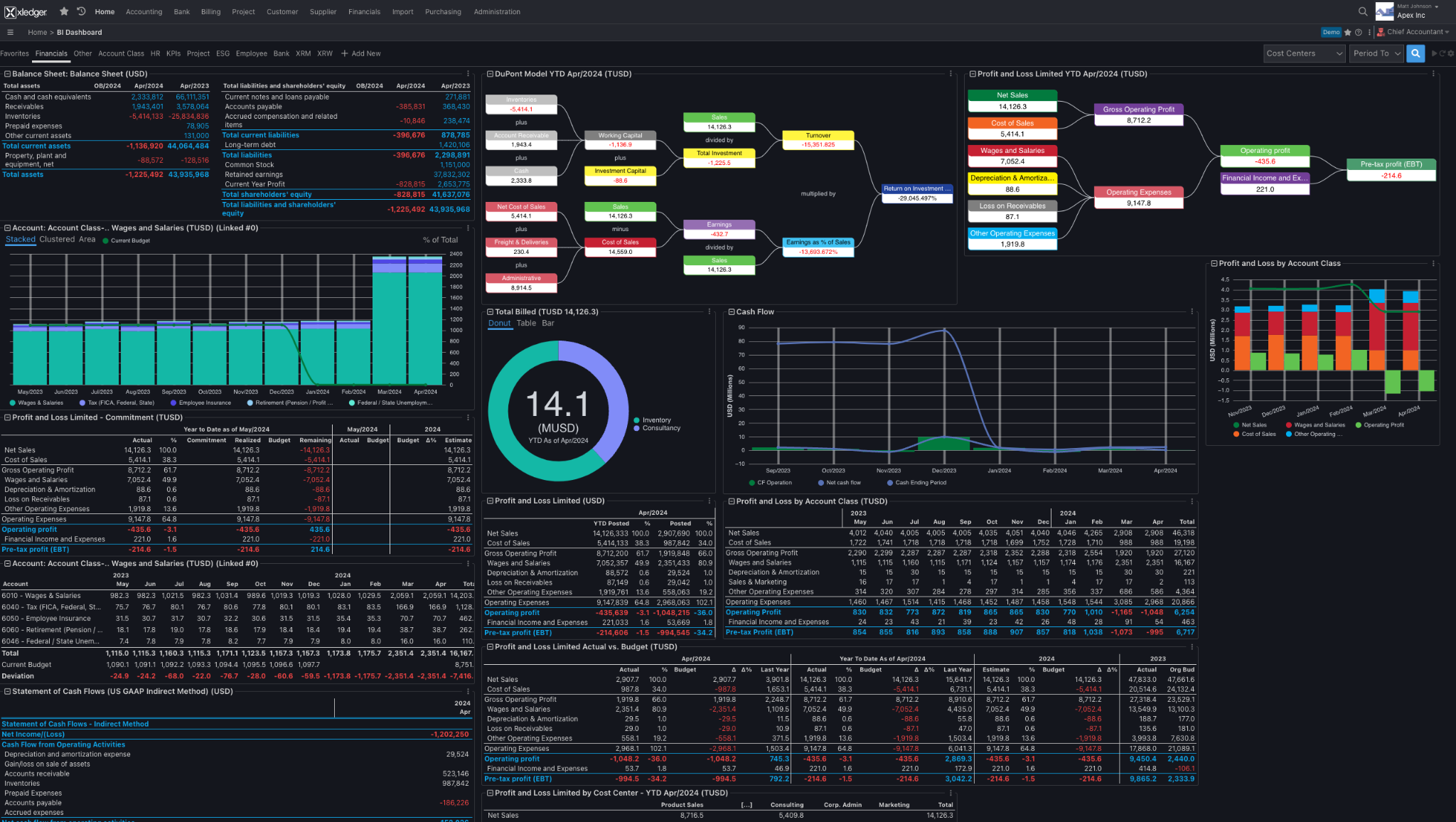
Xledger has been selling cloud finance software for more than 25 years, and it says it now supports over 10,000 organisations in over 60 countries. Its hierarchical structure lets you set up suppliers and customers once at group level, and consolidate at several levels of your organisation.
Every customer also gets a dedicated consultant and project manager for implementation. It isn't the right pick if you're a smaller group that wants to see a price before you talk to sales.
Key features
- Group-level records: Set up suppliers and customers once and use them across every entity.
- Multi-level consolidation: Consolidate at several levels of the group and report in multiple currencies.
- Intercompany postings: Post both entities' journal lines in the same journal, so intercompany accounts stay in balance.
- Purchase-to-pay automation: Process supplier invoices with built-in OCR and approval workflows.
- Making Tax Digital: Submit UK VAT returns through a direct link to HMRC.
- Open API: Connect other business systems without manual imports.
Pricing
Xledger has no public pricing. You pay a monthly subscription plus a one-time implementation charge.
Rating
Capterra rating: 4.5/5 (12 reviews).
Pros
- Group-level suppliers and customers mean you're not setting up the same records in every entity.
- Consolidation works at several levels, which suits groups with sub-groups or regions.
- Every customer gets a dedicated consultant and project manager, so you know who's running your implementation.
Cons
- Only 12 Capterra reviews, so there's less user feedback to go on.
- The implementation charge comes on top of the subscription, so budget for both in year one.
5. Microsoft Dynamics 365 Business Central
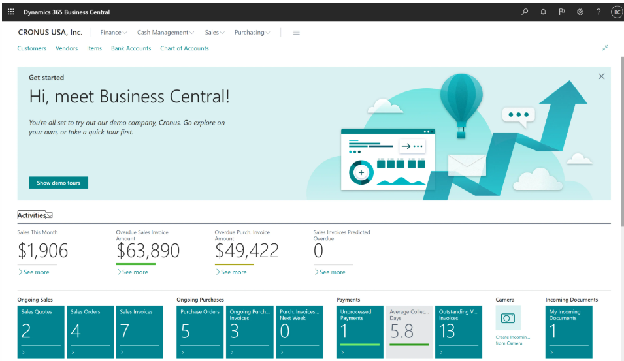
Business Central is Microsoft's business management system for finance, sales and operations. It’s priced per user, with no cap on how many users you add, and multiple companies are included in both plans. So unlike NetSuite OneWorld, a new subsidiary abroad doesn't change your licence.
For group finance, though, Microsoft's consolidation guide says eliminations are a manual process. It isn't the right pick if you want intercompany eliminations handled for you.
Key features
- Multiple companies: Run several companies under one subscription, so you won't pay per subsidiary.
- Consolidation reports: Review each business unit, the eliminations and the group total in one consolidated trial balance.
- Consolidation API: Share data from business units to the consolidated company across environments.
- VAT groups: File one UK VAT return for the group through Microsoft's VAT Group Management extension, with members submitting to a group representative.
- Copilot: Use Microsoft's AI assistant, which is included in the Essentials plan.
Pricing
Business Central Essentials costs £61.50 per user per month, and Premium costs £84.60 per user per month. Both are paid yearly and don't include VAT. Implementation is a separate cost.
Rating
Capterra rating: 4.1/5 (209 reviews).
Pros
- A new company in another country doesn't change your licence, because you pay per user.
- You can customise and extend it on either plan.
- The consolidation API can pull figures from companies held in other Business Central environments.
Cons
- Group VAT isn't part of the standard Making Tax Digital feature.
- Every budget holder and approver adds to the per-user bill.
6. Access Financials
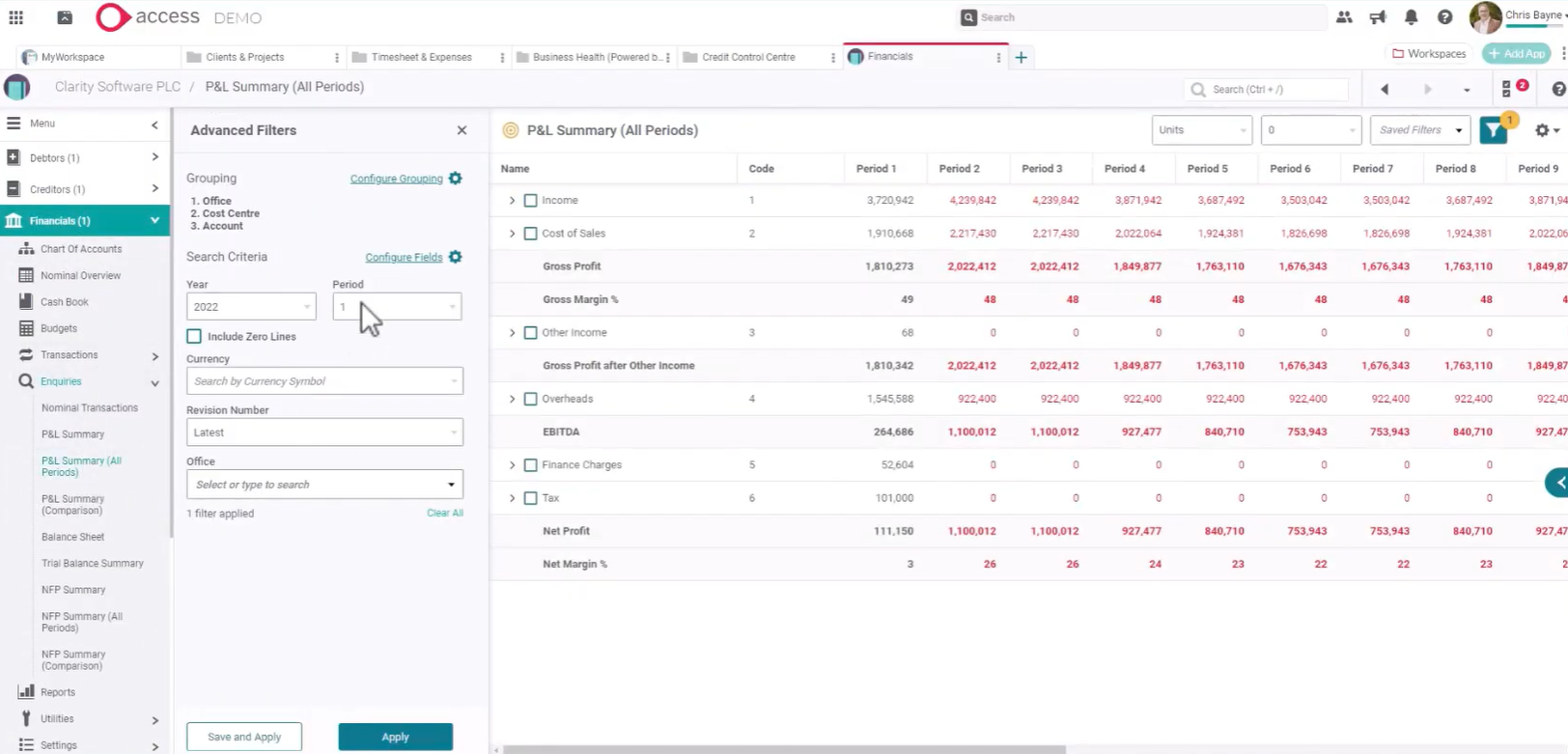
Access Financials is a UK cloud finance system from The Access Group, built for UK organisations turning over £2 million to £200 million. It covers accounting, credit control, fixed assets, stock control, purchasing, project accounting and cash flow forecasting, and you pick the modules you need.
If you run a group, look closely at how consolidation is set up. Access lists multi-entity consolidation among its capabilities, but its help centre says it isn't a standard module. Your companies report into a separate consolidation instance linked to the operational ones, which needs additional services to set up. It isn't the right pick if group consolidation is the main reason you're looking past NetSuite.
Key features
- Consolidation: Report across companies through a separate consolidation database linked to each company's ledger.
- Project accounting: Track costs and income against projects alongside the core ledgers.
- Making Tax Digital: Submit VAT returns through the built-in MTD connection.
- Microsoft integration: Work with your data in Excel, Word and Outlook.
Pricing
Access lists two tiers on its comparison page. The tier for scaling businesses starts from £97 per user per month, and the advanced accounting tier is priced on request.
Rating
Capterra lists just one review, which isn't enough for a meaningful rating.
Pros
- You can work out a rough licence cost for your finance team from Access's own per-user tiers.
- An MTD connection covers UK VAT without a bolt-on.
- Modular setup means you only pay for the areas you switch on.
Cons
- Consolidation needs a separate database and isn't a standard module.
- There's very little independent review data to compare against.
7. AccountsIQ
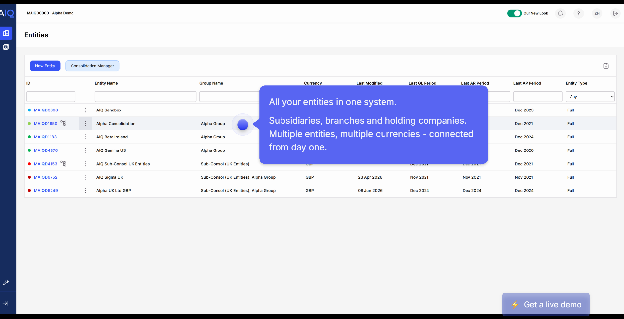
AccountsIQ is a cloud accounting platform for finance teams that have outgrown entry-level systems. If you're a smaller group looking past NetSuite, it's a lighter option, sold in Core, Growth and Scale packages. It's registered in Ireland with offices in Dublin and London, and over 35,000 users in over 85 countries rely on it.
Before you switch, count your NetSuite custom segments. AccountsIQ's analysis tops out at six dimensions on its Scale package, with four on Growth and two on Core. It isn't the right pick if you report on more than six dimensions.
Key features
- Workflow approvals: Add unlimited approval steps from the Growth package up.
- Sandbox database: Test changes in a copy of your system before they go live.
- FX payments: Pay suppliers in other currencies through a TransferMate link.
- Mobile app: Approve invoices, submit expenses and check reports on your phone.
Pricing
You won't find sterling prices on AccountsIQ's pricing page, because each package is marked as price on application. Its FAQ does give a starting point, though, of €275 a month for the Core package.
Rating
Capterra rating: 4.6/5 (44 reviews).
Pros
- Packaged tiers make it clear which features come with which plan.
- You get UK and Ireland support, with an average first response time of 27 minutes.
- FX payments and bank feeds come on every package.
Cons
- If you run more than one company, you'll be starting on Growth or Scale, because Core is limited to a single entity and two users.
- The sandbox database and fixed asset register both start on Growth.
How we evaluated the NetSuite alternatives on this list
This list is for UK mid-market finance teams weighing up NetSuite, so we judged each system on six questions:
- Group consolidation: Whether your entities consolidate in one system, and how intercompany and eliminations are handled.
- Licence growth: What happens to the bill when you add a company, a user or a module, and whether prices are published.
- FX translation: How foreign subsidiaries are translated, and whether average rates are worked out for you.
- UK VAT: Whether Making Tax Digital is built in, and whether Group VAT returns are supported.
- Reporting depth: How many dimensions you can analyse by, and whether your current classifications will fit.
- Admin skills: Whether your finance team can run it day to day, or you'll need a specialist.
How to choose a NetSuite alternative
Start with your deadline. That might be your NetSuite renewal, your year-end, or the date your current system's contract runs out.
- Nine to 12 months away: You've got time to shortlist, run demos and plan a go-live for the start of your next financial year.
- Closer than that: Focus on two or three vendors and ask each for a realistic timeline.
Then test your shortlist on your own group, because a standard walkthrough may not tell you much. In each demo, ask the vendor to:
- Consolidate your actual group, in your currencies.
- Show how your current classifications and dimensions would map across.
- Explain what happens to the price when you add a company, a user or a module.
Whoever signs off on the decision, whether that's your CEO, your trustees or your board, our guide to making the case for new finance software will help you put it to them.
Which NetSuite alternative is right for you?
It comes down to how many companies you run, and whether you need a full ERP or just strong group finance. If you still run stock or manufacturing, compare Acumatica with Business Central Premium. If you'd rather have a modular platform with a big marketplace, put Sage Intacct on your shortlist.
For a large group that consolidates at several levels, look at Xledger, and if your reporting needs are lighter, AccountsIQ. And if you trade in many countries, staying on NetSuite may cost you less than moving. Our five reasons not to switch are worth a read.
But if you run several mostly UK companies, and month-end and intercompany are what slow you down, iplicit was built for that. Book a demo to see it consolidate a group like yours or start with a three-minute Quick Tour.
What is the best alternative to NetSuite for a UK company?
What is the best alternative to NetSuite for a UK company?
If your group's main need is multi-entity finance, iplicit is the closest fit for a UK company. That's because consolidation and intercompany come as standard, and you get as many reporting dimensions as you need, such as department, site and fund. Sage Intacct suits you if you want a modular platform, and Acumatica is better if you still need stock or manufacturing.
Is there a cheaper alternative to NetSuite?
Is there a cheaper alternative to NetSuite?
While NetSuite doesn’t publish pricing, several NetSuite alternatives do. Business Central starts at £61.50 per user per month, Access Financials at £97 per user per month and Sage Intacct from £1,200 per month, all excluding VAT.
iplicit doesn't publish prices either, but its subscription pricing scales with your users and entities, with multi-entity and multi-currency capability included rather than sold as extra modules. Your total still depends on users, entities and implementation, so compare full three-year quotes.
Why do companies move away from NetSuite?
Why do companies move away from NetSuite?
Cost is one reason, because the NetSuite licence grows with every module and user you add, and OneWorld adds to it once you run several subsidiaries. Some groups also find they're maintaining a full ERP when all they need is group finance. And if the person who understands the setup leaves, or the renewal quote arrives just before year-end, that's what tips them into looking.
How do you get your data out of NetSuite?
How do you get your data out of NetSuite?
NetSuite's Full CSV Export, which only an Administrator can run, exports lists like customers, items and departments but doesn't export all data. For transactions, Oracle points you to saved searches, reports, web services or SuiteAnalytics Connect, though Connect's ODBC access carries an extra fee. Oracle also notes that reports make it easier to match totals than saved searches do. Your new vendor should plan this with you before go-live. Our guide to implementing iplicit shows how we do it.
How long does it take to switch from NetSuite?
How long does it take to switch from NetSuite?
It depends on the size of your group and how much history you bring across, so ask each vendor for a realistic timeline in the first conversation. With iplicit, you can be live in weeks, and you'll test everything in a sandbox built with your own data before go-live. Aim for the start of a financial year, so you don't split one year across two systems.