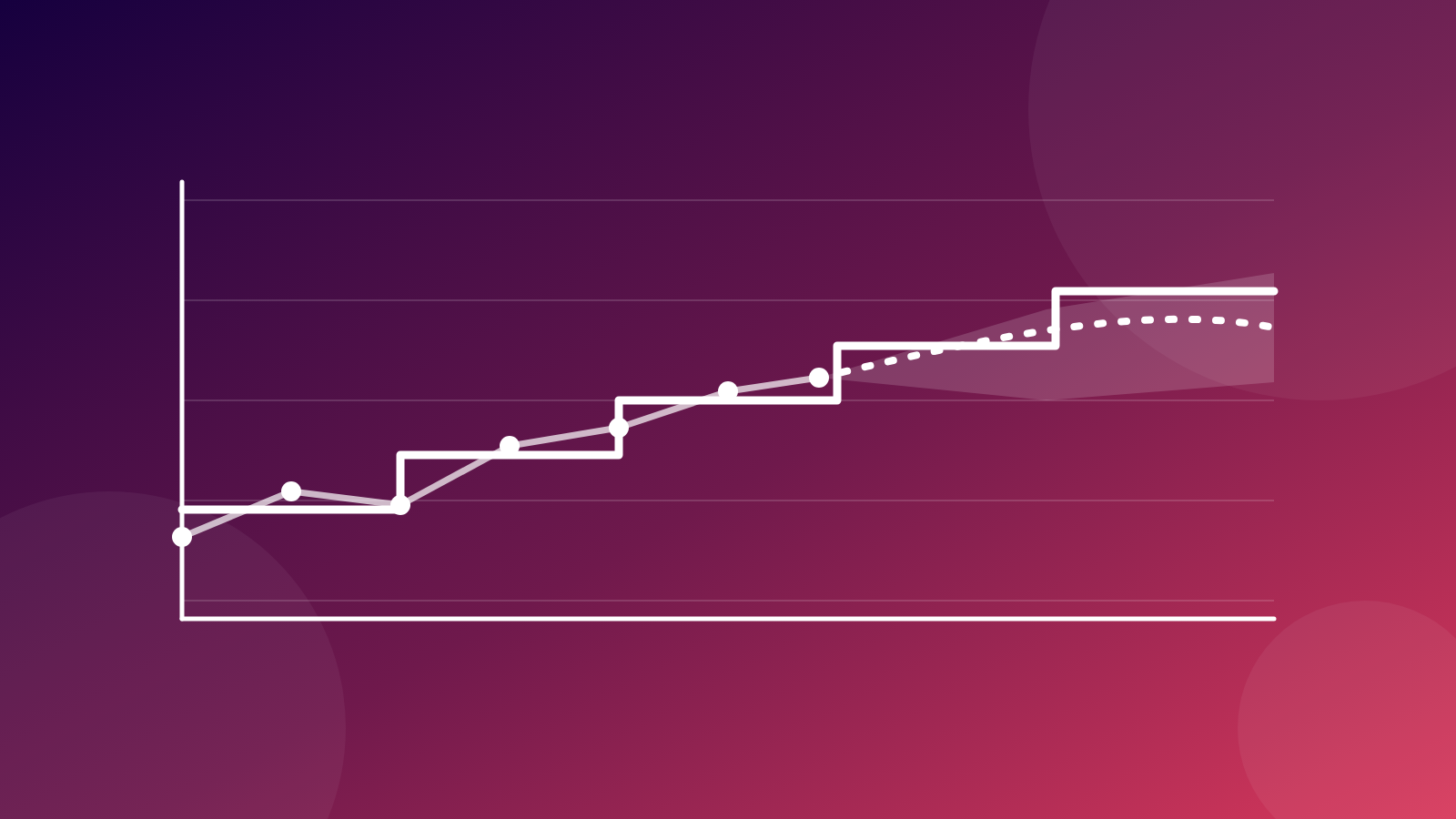
A budget is your plan for how you’ll spend your money over a set period. A forecast is your best estimate of what will actually happen to your income and expenses. This guide explains the differences, how the two work together, and three tips for getting both right.
Budgeting and forecasting are two essential tools for financial planning – but how can you tell them apart?
Despite being very different practices, the two terms are often used interchangeably. If you’re guilty of doing this, you’ve come to the right place.
In simple terms, a budget is your plan for how you’ll spend your money over a specific period of time. A forecast is your best estimate of what will actually happen to your income and expenses.
While both budgeting and forecasting are important, they serve different purposes – so you need to use both strategically.
Budgets exist to control your spending
Creating a budget is all about setting parameters for expenditure.
This process is mainly led by a business’s finance department, but will often include input from the heads of other departments, too. It generally happens at the start of the financial year, with stakeholders coming together to agree spending targets, how they’ll be monitored, and any key financial controls for the year ahead.
Once the budget is agreed by the finance team, it will usually be signed off at board level and then adjusted as the year progresses.
A key feature of a budget is that it’s primarily a finance function, held in a finance system.
For finance teams, budgets contain mission-critical details. By running regular reports to track budget vs actual spend, they can carefully manage the business’s cash flow – which then directly affects business activities, such as procurement and purchase approvals. (For more on reading those reports, see our guide to the questions to ask before you explain a variance.)
Many finance teams now add a third column to that report: budget vs actual vs forecast. It shows not just how far you’ve drifted from the plan so far, but where you’re likely to land by year end.
Forecasts are an important projection to help you plan for the future
In contrast to budgeting – which is very much focused on the here and now – a forecast requires you to look ahead and predict future performance (such as incoming revenue and outgoing spend).
This isn’t just an activity for the finance department; all operational departments are likely to be involved with forecasting.
Creating a forecast will use numerous data sources, such as:
- Sales and revenue
- Headcount
- HR
- Operations
- Strategic projects, and more
The forecast provides a target to work towards, as well as metrics for the board – such as what’s expected for the business in the period ahead. The initial forecast is likely to happen at the start of the year but will then be reforecast monthly or quarterly, based on actual performance.
Forecasts often draw on data held outside the finance system, in CRM, HR and operational tools. But they have a deep impact on the business at large, so individual departments will often use them to support the collective goal of business growth.
For example, the board might need access to profit and loss forecasts in order to plan future investments, while the sales team may need lead generation and sales pipeline forecasts to create internal targets. In addition, forecasts are extremely useful for ‘what if’ scenario planning, where the cost and return of a proposition are weighed up to predict the chance of future success.
More teams are also moving to rolling forecasts. Instead of forecasting to a fixed year end, a rolling forecast always looks the same distance ahead – typically 12 or 18 months – and adds a new period each time one closes.
Budget vs forecast: the main differences
| Aspect | Budget | Forecast |
|---|---|---|
| Purpose | Sets a plan and controls spending | Predicts what’s likely to happen |
| Question it answers | Where do we want to be? | Where are we heading? |
| Timeframe | Usually the financial year | Months ahead, often rolling 12 to 18 months |
| How often it changes | Set once a year, occasionally revised | Updated monthly or quarterly |
| Who owns it | Finance, with department heads | Finance and operational teams together |
| How it’s used | Budget vs actual reports, spending approvals | Scenario planning, cash flow, investment decisions |
How budgets and forecasts work together
Budgets and forecasts aren’t always used in isolation. There are instances where they support each other to help a business achieve its goals.
If a company is trying to raise funding, for example, it’ll need an accurate forecast to produce a business valuation.
Overestimations can damage credibility, so the valuation can’t stray far from the facts – even when it’s a projection. To help, the forecast will usually be supported by actual data, sourced by the finance department. This could include current budget reports to demonstrate existing spend and controls, as well as other live data for positioning. Combined, this can help the business create a compelling proposition that sets it apart in the market.
The same relationship plays out every month. The budget sets the target. Actuals show what’s happened so far. The reforecast shows where you’ll end up if nothing changes – and gives you time to act on the gap.
Our tips for budgeting and forecasting success
1. Make sure your data is accurate and up to date
Forecasting and budgeting without live data often leaves you working with a snapshot of information, which only represents a single moment in time. This can leave you with a short-sighted report that misses the most recent, critical details.
Similarly, if information is submitted manually, you could find yourself working with inaccurate data that has fallen foul of human error and keying mistakes.
Automated finance software that includes tools built for budgeting and forecasting gives you data that’s accurate and accessible whenever you need it.
Watch: The data discovery: unlock your financial data. In this one-hour on-demand webinar, iplicit’s Guy Burton shows how finance teams can bring scattered data together, move beyond spreadsheets and get a clear, consolidated financial view. Watch the webinar
2. Always collaborate
Budgets, in particular, will affect every area of your business – so it’s important to be both transparent and receptive. Otherwise, you could find yourself lacking vital context for decision-making (or making decisions that simply won’t be practical for the people working within them).
Fortunately, cloud finance software that acts as a central resource makes cross-referencing easy, as a single source of truth for all your key business information. Collaboration is simplified, with essential financial reports available to the right people, at the right time.
3. Stay flexible
No matter how well you budget and forecast, a curveball could hit your business at any moment. Accurate data and up-to-date reporting give you the freedom to act quickly, armed with the knowledge you need to make essential judgements.
Don’t restrict yourself. Make sure you’re equipped with budgeting and forecasting software that shows your full financial position, alongside customisable reporting that lets you analyse down to the most granular details.
Video: Walking With The Wounded’s story with iplicit.
Budgeting and forecasting in iplicit
With iplicit’s budgeting and forecasting software, you can:
- Build budgets on up to three attributes at once, entered manually or imported from Excel
- Consolidate updates into departmental and project budgets, as well as an overall organisational view
- Compare actuals against budget whenever you need to
- Include committed as well as posted balances in budget checking, with a warning on purchase orders and requisitions when a line is projected to exceed budget
- Let administrators stop over-budget documents being submitted
- Give budget holders the access they need to see their own budget vs actual reports
- Create automated workflows that trigger approval requests
It makes a real difference to budget holders. “The ability to share budget vs actual reports with budget holders has been revolutionary,” says Hubert Hutchinson, Head of Finance at Reprieve. “Previously, we had to build reports in Excel by extracting data from our previous accounting system. Now, budget holders have the access they need.”
For more on variance, read our guides to budget vs actual and budget variance analysis without spreadsheets.
See it for yourself
The best way to see what iplicit can do is to try it for yourself. We’d love to show you the product’s key features, so book a demo or watch the 3-minute tour.
What is the main difference between a budget and a forecast?
What is the main difference between a budget and a forecast?
A budget is a plan for what you intend to spend and earn over a set period. A forecast is a prediction of what you expect to happen, based on actual performance so far. The budget sets the target; the forecast tells you whether you’re on course to hit it.
Can you have a forecast without a budget?
Can you have a forecast without a budget?
Yes, but you lose a fixed point to measure against. Most organisations use both: the budget for control and accountability, the forecast for decisions about what to do next.
How often should you reforecast?
How often should you reforecast?
Monthly or quarterly is most common. Monthly reforecasting suits businesses with fast-changing costs or revenue; quarterly suits more stable organisations.
What is a rolling forecast?
What is a rolling forecast?
A rolling forecast always looks the same distance ahead, typically 12 or 18 months. Each time a period closes, a new one is added at the end, so you’re never forecasting to a cliff edge at year end.
What is budget vs actual?
What is budget vs actual?
Budget vs actual compares what you planned to spend or earn with what really happened. The difference is the variance, which tells you where to look more closely. Read more in our guide to budget vs actual variance.