Accounts payable and receivable software
From invoice capture and payment runs to credit control and cash collection, iplicit helps finance teams automate the work behind getting money in and out of the business.
Our accounts payable and receivable software brings AP and AR together in one cloud-based accounting system, reducing manual processing while giving finance teams tighter control and visibility.
What is accounts payable automation?
Accounts payable automation uses software to handle the routine steps of paying suppliers – capturing and coding invoices, matching them to purchase orders, routing them for approval and scheduling payments – so finance teams spend less time on data entry and more time reviewing exceptions. With iplicit, it's built into your finance system rather than bolted on. Every step, from invoice to payment, happens in one place.
HOW IT WORKS
How does accounts payable automation work?
In iplicit, every supplier invoice follows the same five steps. Your team steps in only where judgement's needed.
1
Receive
Supplier invoices arrive in iplicit, not in someone's inbox.
2
Capture and code
iplicit reads the supplier, amounts and line details, then codes the transaction to your accounts.
3
Match
The invoice is checked against the purchase order and supplier record. Likely matches are suggested; anything that doesn't line up is flagged for review.
4
Approve
The invoice goes to the right approver, based on your rules. Every sign-off is recorded.
5
Pay
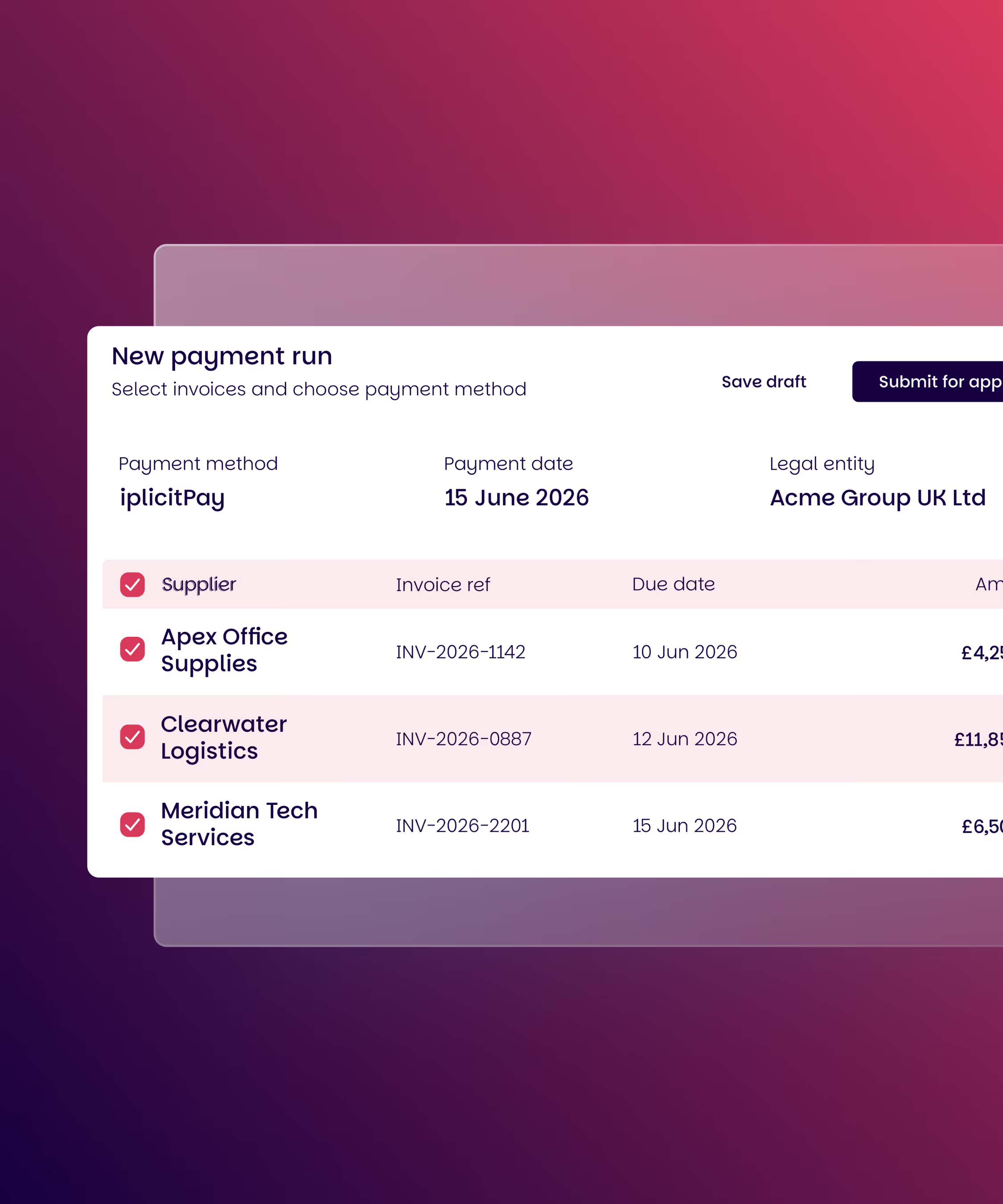
Approved invoices feed into your payment run, and iplicitPay sends the payment directly from iplicit.
What should a business look for in accounts payable automation software?
Good accounts payable automation software should do a lot more than digitise invoices. It connects the whole process, from receiving an invoice through to approval and payment.
Approval workflows - invoices routed to the right people for approval before payment, with a clear record of the process.
Automated payment runs - approved invoices feeding naturally into payment processing rather than requiring another manual process. That includes direct supplier payments - it can all be done within the cloud-based finance system.
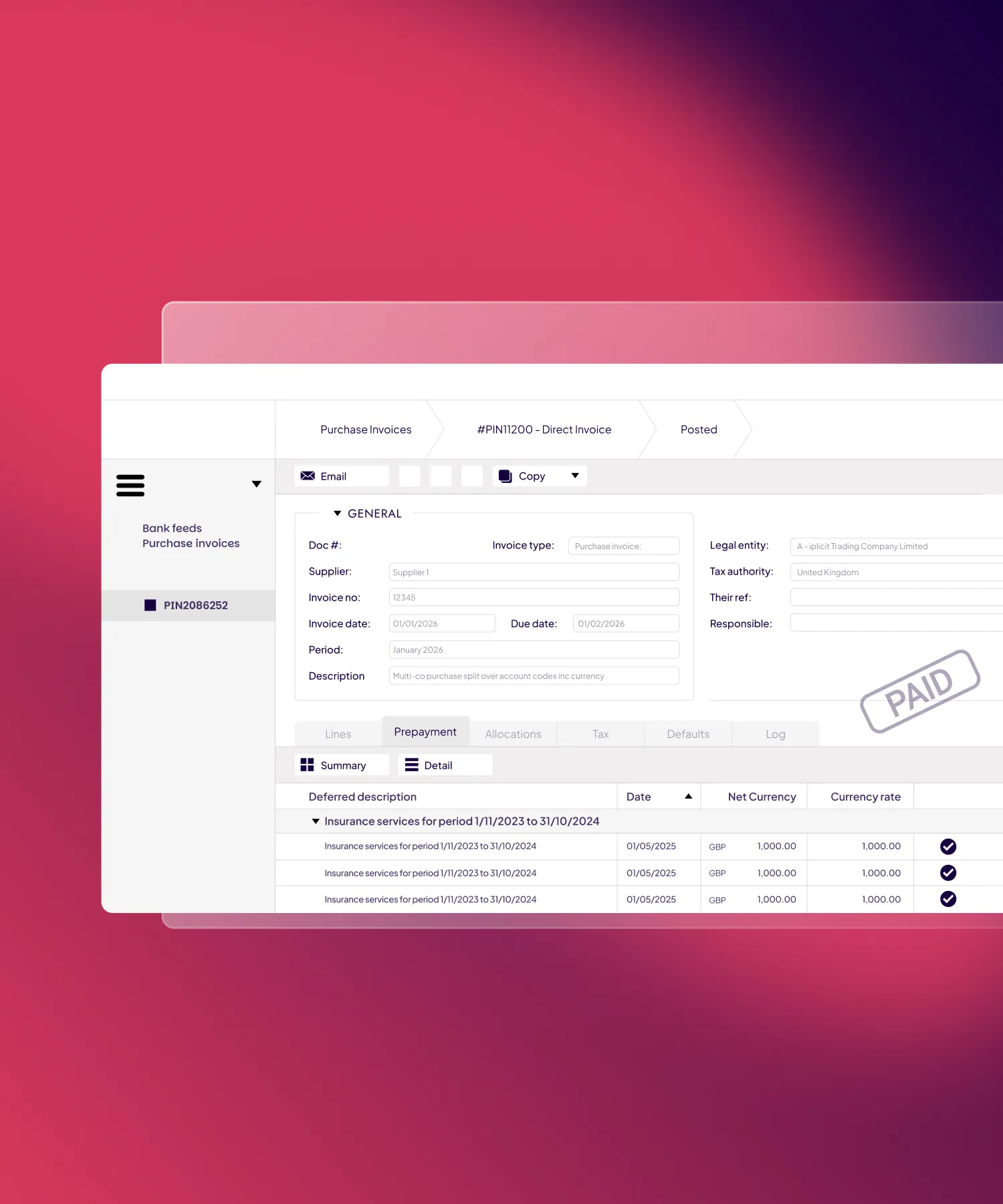
Automated invoice capture and coding - invoices are captured digitally and relevant information extracted and coded without your team having to rekey every detail.
Purchase order matching - invoices matched with purchase orders and supplier information, with finance teams enabled to review exceptions.
Multi-entity AP - businesses operating across several entities can manage the entire group's accounts payable while retaining any and all appropriate entity-level controls and reporting.
Accounts receivable automation and credit control
Accounts payable is only half of the cash-flow picture. Accounts receivable automation helps finance teams manage what customers owe and take action when invoices become overdue.
iplicit keeps track of aged debts - customer transactions and credit-control activity all in one place. With our accounts receivable automation software, set invoice chasing rules for how and when customers should be contacted about overdue invoices. iplicit sends reminders automatically - anything from an initial gentle reminder through to stronger warnings, according to the process you define.
Keep credit control moving - rather than manually reviewing an aged-debt report and deciding who needs chasing, the system identifies debts that require attention before taking the appropriate action.
Reduce debtor days - consistent, timely credit control helps finance teams follow up overdue invoices sooner, improving the chances of collecting outstanding cash without adding another manual process.
Accounts payable and accounts receivable in one system - instead of bolting a separate AP automation tool onto your accounting system, iplicit brings invoice processing, supplier payments, customer transactions and credit control into one platform. For multi-entity organisations, this also means finance teams can manage AP and AR across the group while retaining visibility and control at individual entity level.
FAQs
What's the difference between AP and AR automation?
What's the difference between AP and AR automation?
Accounts payable (AP) automation handles money going out: capturing, matching, approving and paying supplier invoices. Accounts receivable (AR) automation handles money coming in: tracking what customers owe and chasing overdue invoices. iplicit does both in one system, so you see your full cash position in one place.
How does accounts payable automation work?
How does accounts payable automation work?
Invoices are captured and read automatically, coded to your accounts, matched to purchase orders, routed for approval and then paid. Your team reviews approvals and exceptions. The software handles the repetitive steps in between.
Is AP automation worth it for a mid-sized business?
Is AP automation worth it for a mid-sized business?
Yes. As transaction volumes grow, manual invoice processing grows with them. Automation keeps that admin flat, so your finance team can focus on exceptions, analysis and decisions instead of data entry. Pentland Ferries saves two days a month on payment runs alone.
Can iplicit manage accounts payable across multiple entities?
Can iplicit manage accounts payable across multiple entities?
Yes. iplicit is built for multi-entity organisations. You can manage AP for the whole group in one place, while keeping entity-level controls, approvals and reporting.

Ready to automate your accounts payable and receivable?
Want to spend less time processing invoices, preparing payment runs and chasing overdue debts? See how iplicit brings AP automation, invoice processing, supplier payments and credit control together in one finance system.