
Poor decisions often result from lack of data rather than faulty judgement. The right accounting software gives you accurate, real-time financial data so you can budget accurately, spot trends early, see one version of the truth across your systems and free up time to plan strategically instead of chasing numbers.
The short version:
- Budgeting and forecasting tools let you compare actual results with your plan and change course before a small variance becomes a big one.
- Customisable dashboards and reports mean you can see the exact figures and trends you need, in the format you need them.
- Integrating your accounting system with other business tools gives everyone a consistent, accurate, up-to-date view of the organisation.
- Automating manual accounting tasks frees up time your team can spend on analysis and planning instead of data entry.
- Real-time stock and inventory data helps you anticipate demand and control costs, instead of reacting after the fact.
Every decision an organisation makes, from setting next year's budget to launching a new product line, depends on the quality of the information behind it. Get the numbers wrong, or get them too late, and the decision that follows is a risk.
The right accounting software changes that. It gives you accurate, accessible, real-time financial data, so you can make the right call instead of a guess – and adjust course quickly when circumstances change. This article looks at five ways accounting software supports better financial decision-making, from budgeting and forecasting through to stock control, and where iplicit fits into that picture.
Why decision making breaks down without the right data
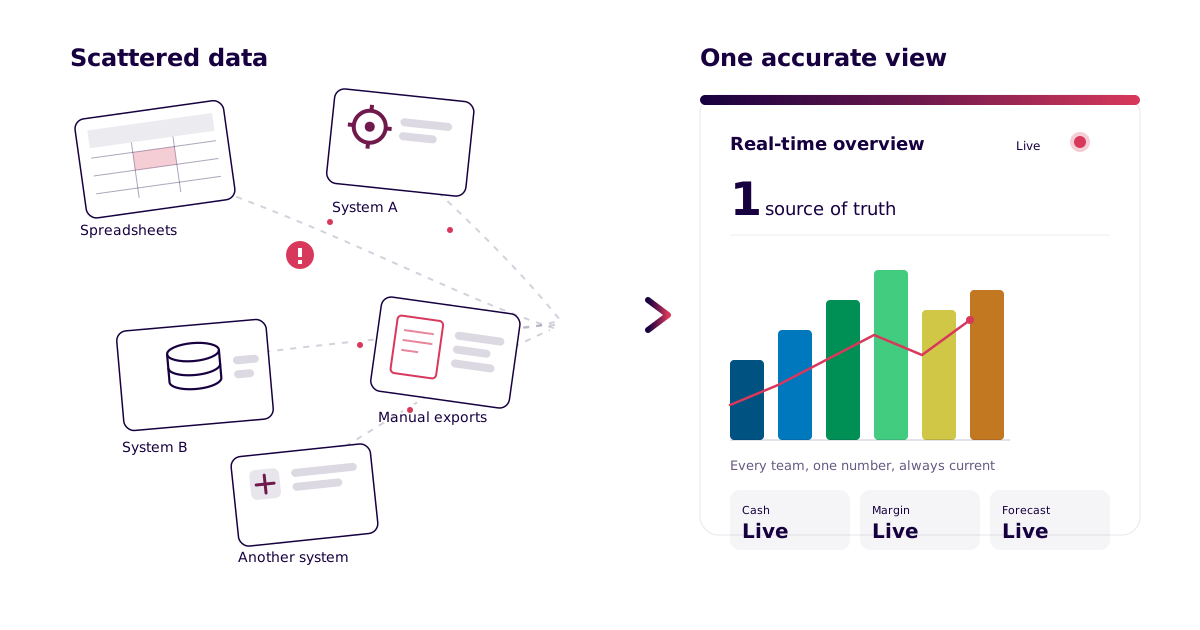
Financial decision making breaks down when the data behind it is incomplete, outdated or scattered across different systems. Finance teams end up making the best guess they can from partial information. Modern accounting software solves this by pulling your financial data into one accurate, real-time source, so every decision is backed by current numbers rather than a month-old export.
To take one example, from the healthcare sector, the 2026 Deloitte Center for Health Solutions survey found that 73% of healthcare finance chiefs said they were expected to be regularly or heavily involved in critical enterprise decisions – yet only 49% felt properly prepared to contribute to those decisions.
Support with budgeting and forecasting
The right accounting software helps you check whether your budgets reflect reality. It lets you build budgets from historical data, set financial goals and track actual performance against them as the year progresses. When results diverge from forecast, you see it immediately and can change course before a small variance becomes a bigger problem.
Comparing actual results with forecast, not just plan versus outcome at year end, is what lets you assess the financial impact of a decision while there's still time to act on it.
Spot trends with customised reporting, in the format you need
If you already track your accounts properly, the data you need exists. The question is how easily you can pull out the figures and trends that tell you what’s happening in the business. Accounting software with customisable reporting and dashboards provides that information directly, giving you the exact data you need, in the format you need it.
Easy-access dashboards give you the standard information most finance teams need day to day, while customisable reports let you specify the exact data and format for a particular decision.
Take a holistic view with system integration
Poor decisions often happen when nobody can see the full picture. Accounting software that integrates with your other business systems, from payroll to your CRM, gives you one accurate, up-to-date view across the organisation. That single source of truth means decisions are based on what is happening everywhere across the organisation, not just in finance.
You benefit from one consistent source of insight across your operations, rather than reconciling figures between separate systems by hand, which helps you make the right call faster.
Free up time for strategy and planning
One of the most direct ways accounting software improves decision-making is by giving your team back their time. Automating manual, repetitive accounting tasks frees up hours that would otherwise go on data entry and reconciliation. That time can go towards analysis and planning instead, which is how better decisions are made.
With more time available, your finance team can spend it on higher-level work: reviewing variance, modelling scenarios, and preparing recommendations for leadership, rather than processing transactions.
Where iplicit fits
iplicit brings the financial data behind all five of these decisions into a single cloud platform. It combines budgeting and forecasting, customisable reporting, native integrations and automation in one system, so finance teams are not stitching the picture together from separate tools.
iplicit customer Dawn Capital cut its monthly management reporting time by 50%, from up to 80 hours down to around 40, freeing staff to spend more time on higher-level analysis. Since the Abbey Group adopted iplicit, management “can look at all the companies together and make their plans with better data”, according to Group Finance Manager Danielle Disley. At SEP2, CFO Mahreen Jamil says: “It’s not just about saving time. I now have the freedom to dive deeper into analysis, driving better business results."
The bottom line
Better financial decisions come from better visibility, not more effort. Accounting software that gives you real-time budgeting, customisable reporting, integrated systems, automation and stock control removes the guesswork that leads organisations to the wrong call, or the right call too late.
If you're evaluating options, you can see iplicit in action via a three-minute quick tour.
What is financial decision-making support in accounting software?
Financial decision-making support in accounting software means giving finance teams accurate, real-time data on budgets, performance and trends, rather than static reports pulled together manually. It typically includes budgeting and forecasting tools, customisable dashboards and integrations with other business systems like payroll and CRM.
Why does real-time data improve business decisions?
Real-time data shows you what is happening in the business now, not what happened last month. That matters because decisions made on outdated numbers can lock in a course of action that no longer fits current performance, whereas current data lets you adjust before a small issue grows.
How do you choose accounting software for better decision-making?
Start by listing the specific decisions your finance teamstruggles to make quickly, such as budget variance checks or multi-entityreporting, then look for software that gives real-time visibility into thoseexact areas rather than choosing on price alone. A dedicated guide to choosingaccounting software can help you compare options properly.