
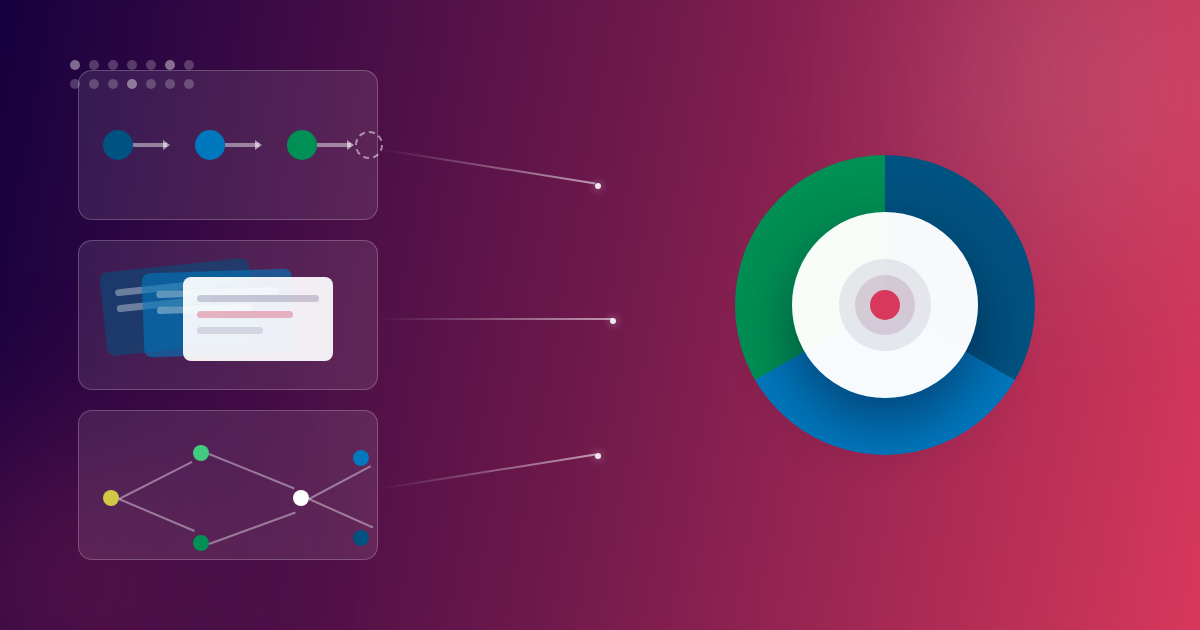
- Workflow automation replaces manual invoice processing and bank reconciliation with defined, repeatable steps, cutting both time and error risk.
- Multi-entity consolidation combines every entity's numbers automatically, including intercompany eliminations, instead of a spreadsheet rebuilt by hand each month.
- API-first architecture lets finance connect new systems, currencies or countries as the organisation grows, instead of each addition becoming a one-off project.
- Growth itself is what breaks manual processes. A workaround that copes with three entities rarely survives thirty.
Introduction
Growing organisations outgrow entry-level accounting software in a predictable order. First the manual data entry becomes unsustainable, then consolidating more than one entity by spreadsheet becomes unreliable, then every new system, currency or country needs its own one-off integration project. Each stage adds work that doesn't scale with the business.
The UK's mid-market alone, companies with £10 million to £100 million in turnover or 50 to 500 employees, made up just 0.5% of UK companies but accounted for 26% of employment and 30% of economic output, according to NatWest Group. That's a lot of finance teams hitting the same wall at roughly the same stage of growth. This guide covers what automating financial workflows actually involves, across three areas: workflow automation, multi-entity consolidation, and API connectivity.
What does it mean to automate financial workflows?
Automating financial workflows means replacing manual, repetitive finance tasks, such as invoice entry, bank matching and month-end postings, with defined steps that run inside the finance system itself rather than across separate spreadsheets. Instead of someone re-keying the same transaction in two places, the data flows once, following rules the finance team has already set.
In practice, that shows up first in accounts payable and bank reconciliation, the two tasks that generate the most manual volume in a typical finance team. AI invoice processing captures and codes supplier invoices automatically, routes them for approval, and matches them to purchase orders. Automated bank feeds download transactions and match them against the ledger without someone reconciling line by line.
Why do growing organisations need multi-entity consolidation and real-time reporting?
Growing organisations need multi-entity consolidation because manual consolidation, combining each entity's numbers in a spreadsheet, gets slower and less reliable with every entity added. A system built for consolidation combines entities automatically, eliminates intercompany transactions, and produces a real-time group view instead of a month-end rebuild.
The difference shows up clearest at month-end. du Boulay cut its close from three weeks to under one week after automating reconciliations, postings and consolidation that had previously run through spreadsheets. Dawn Capital cut its management reporting time in half the same way. Neither result came from a better report template. Both came from removing the manual steps between a transaction happening and it appearing in a group number.
Intercompany transactions are usually the part that breaks first. A transaction between two entities in the same group, a recharge or a shared cost, has to be entered and reconciled on both sides, or the group's numbers don't balance. Automated consolidation records the transaction once and creates the matching entry in the other entity automatically, which is why legacy systems built for a single entity are often the actual reason a growing group starts evaluating new finance software, not a specific feature gap.
What should you look for in a connected, API-first finance platform?
A connected finance platform should treat new systems, currencies and entities as additions to one existing network, not as separate integration projects that each need their own budget, timeline and specialist to run them. Work through this checklist when evaluating a platform:
- Open API access: can other systems, such as payroll, CRM or inventory tools, read and write data through a documented API, or does every connection need custom development?
- Pre-built integrations: are the systems you already use, such as payment or banking tools, natively supported, or will finance need to build and maintain the connection itself?
- Multi-currency support: does the platform revalue and consolidate multiple currencies automatically, or does finance convert figures by hand before they can be combined?
- Entity setup speed: can a new entity be added in days using the existing chart of accounts and approval workflows, or does each one need its own configuration project?
- Audit trail: is there a clear, automatic record of every posting and approval across every connected system and entity?
A platform that scores well on open API access tends to score well on the rest, because the same architecture that connects easily to other software also tends to make adding a new entity straightforward.
Where iplicit fits
A finance platform built for growing organisations should handle all three of these areas, workflow automation, consolidation and connectivity, as one connected system from the start. Not three separate purchases bolted together over time as each problem becomes urgent enough to finally fix.
For workflow automation, iplicit's AI invoice processing and approval workflows cut invoice processing from days to hours. The Recruitment Group's AP team went from six people taking around a day and a half to key in invoices to four people doing the same work in about two hours. Unit Hire reports the same shift in its own words: automation now saves the team hours every week that used to go on manual processing.
For consolidation, iplicit combines every entity automatically, eliminating intercompany transactions and producing a real-time group view without anyone rebuilding it in Excel each month, the same capability behind du Boulay's and Dawn Capital's results above. Deferred revenue, depreciation and other spreadsheet-driven postings are automated too, with a full audit trail: SEP2 described its previous deferred-income process in Xero as "two to three days every month," which is now automatic in iplicit.
For connectivity, iplicit connects through open APIs, pre-built integrations and no-code iPaaS platforms, with native integrations into inventory, planning, payroll and CRM systems finance teams already use. The platform is cloud-native, hosted on Microsoft Azure with 99.8% uptime, and ships new releases roughly every two months rather than requiring a major version upgrade. iplicit's own current figures put it at more than 45,000 customers, with a UK-based implementation and support team behind every one of them.
The bottom line: automation compounds, manual work doesn't scale
Every year, hundreds of thousands of new companies join the UK register, many of them new subsidiaries of groups that are already growing. 815,277 companies were incorporated in the UK in the year to March 2026 alone, according to Companies House. A meaningful share of that growth happens inside organisations adding entities, not just new companies starting from scratch.
Manual processes don't fail all at once. They get slower with each invoice, each entity and each new system, until a finance team is spending more time combining data than analysing it. Automating the workflow, the consolidation and the connections at the same time is what keeps that curve flat as the organisation grows.
Ready to see what that looks like on real data? See iplicit in action with a self-guided tour, or book a demo to walk through workflow automation and consolidation with the team.
What's the difference between workflow automation and multi-entity consolidation?
Workflow automation handles repetitive tasks within one set of accounts, such as invoice processing and bank matching. Multi-entity consolidation combines the accounts of several related entities into one group view, which is a separate capability a single-entity automation tool doesn't provide.
Does automating financial workflows mean replacing every existing system?
No, API-first platforms are designed to connect to the systems an organisation already uses, such as payroll, CRM or inventory tools, rather than requiring them to be replaced, with the goal being one connected source of truth rather than a single system that does everything.
Why do intercompany transactions cause so many problems during consolidation?
Intercompany transactions, such as a recharge between two entities in the same group, have to be recorded and eliminated on both sides or the group's totals are overstated. Doing this by hand across many entities is slow and error-prone, which is why automated elimination is one of the first things growing groups look for.
How quickly can a growing organisation add a new entity to its finance system?
With a platform that extends the existing chart of accounts, approval workflows and reporting structure automatically, a new entity can typically be added in days rather than weeks, without a separate configuration project, implementation consultant or lengthy IT sign-off for each one.