
Nonprofit finance teams often run on manual processes, software that cannot support flexible working and systems they have long outgrown. Together, these three issues slow down reporting, put you at a disadvantage when hiring and leave trustees without the transparency they need. True cloud accounting software fixes all three at once.
The short version
- Manual, inconsistent accounting processes make reporting slower and more error-prone, and the problem gets worse every time a staff member who understood the workarounds leaves.
- Software that can't support secure remote access puts you at a disadvantage when hiring and retaining finance staff, most of whom now expect flexibility as standard.
- An outdated finance system that needs expensive upgrades, or is no longer supported by its vendor, is a compliance and security risk.
- True cloud accounting software, built to run over the internet from the ground up, solves all three problems at once by giving every stakeholder secure, real-time access from any device.
- Organisational finances are the single biggest barrier to digital progress for UK charities, cited by 63% of respondents to the Charity Digital Skills Report 2025.
Spending on “back office” systems such as finance might sound like a luxury in the charity world. But it’s harder to deliver social impact if your finance processes are not entirely watertight.
Aside from making admin painful, a clunky accounting system makes it harder to produce the reports that leaders and trustees need. It can also restrict who you can hire and put a brake on growth. This article covers three accounting challenges that commonly hold nonprofits back, explains why on-premises and hosted software make them worse and sets out what a true cloud system changes for finance teams.
1. Your accounts are suffering from process inconsistency
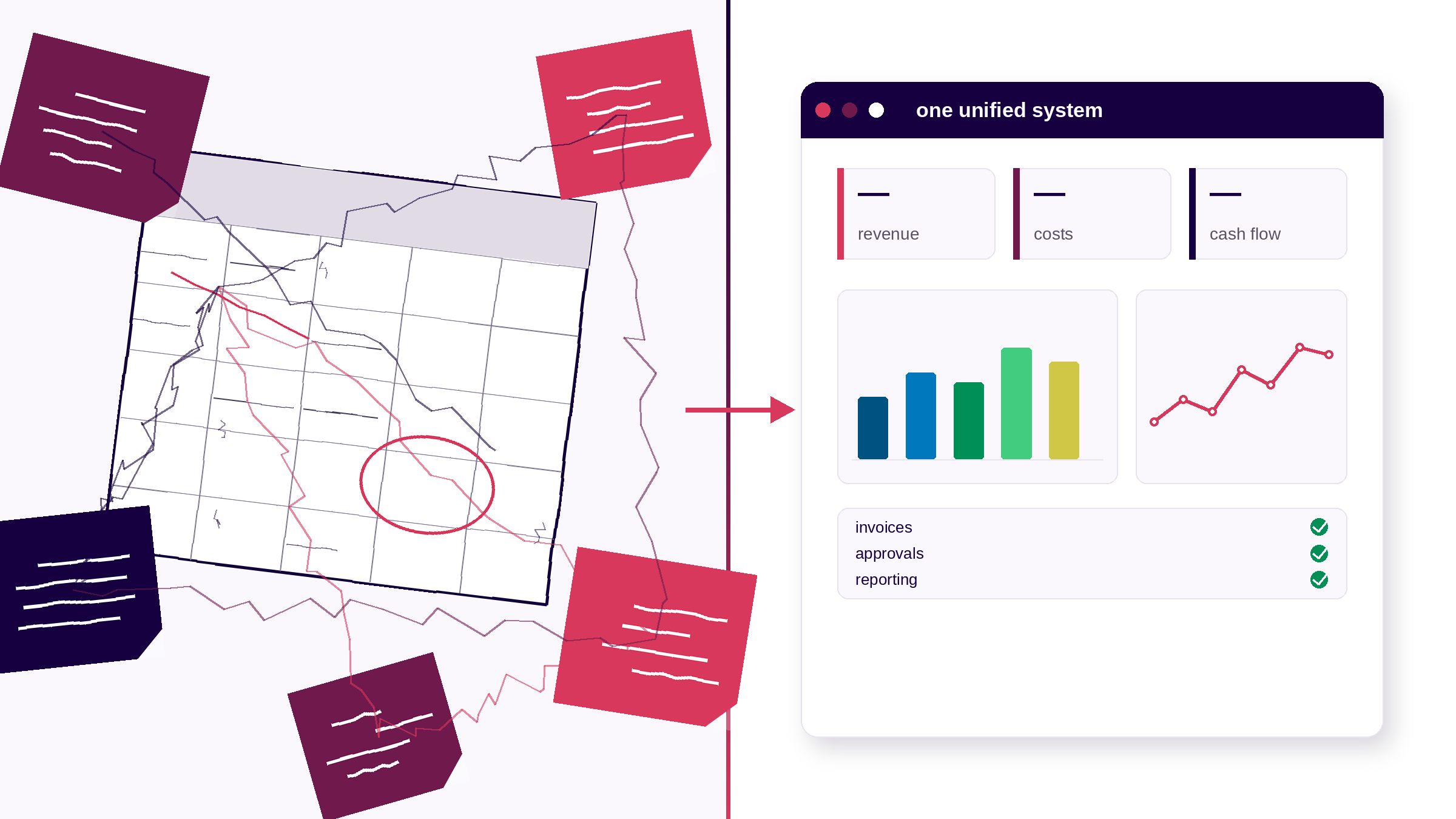
Process inconsistency happens when a nonprofit has no single, standard way of managing its accounts. Different people record and reconcile transactions in different ways, so reporting quality depends on who is doing it and what informal workarounds they remember. That makes routine tasks like reporting slower, more labour-intensive, and more exposed to error.
This problem gets worse every time staff join or leave. Even with a good handover, specific knowledge about workarounds and shortcuts often leaves with the person who created them. Before long, you're relying on an overly complex legacy system that nobody on the team fully understands.
The result is a lack of control for finance managers and a lack of transparency for trustees. That makes it harder to make the strategic decisions your organisation needs to sustain long-term growth.
2. Access to your finance system is too limited
Flexible and remote working is now a standard expectation for many finance staff. It frees people to work from wherever suits them and lets organisations hire the best person for a role regardless of where they live. Software that cannot support this puts you at a real disadvantage when recruiting and retaining staff.
Unfortunately, giving staff that flexibility isn't always straightforward. If you run on-premises or hosted accounting software, it may not support secure remote access at all, which leaves your finance team tied to the office while everyone else works flexibly.
Paying for expensive servers to bolt on limited remote access is one option but it's rarely a good use of a tight budget and it doesn't solve the underlying problem.
3. Your organisation has outgrown its current finance system
You have likely outgrown your finance system if upgrades are expensive and slow or if the vendor no longer supports it with security patches and troubleshooting. An unsupported system is a compliance and security risk. If you are also stuck between the limits of small-business software and the cost of a full ERP system, that is a sign you need something built for your size.
Switching systems can feel daunting. You may fear that migration will take many months and that staff will struggle to adapt in the meantime. But staying on an unsupported system to avoid that disruption just delays the problem and increases the risk while you wait.
On-premises vs true cloud: why the technology underneath is important
On-premises software runs on servers your organisation owns or rents, so upgrades, security and remote access are all down to you. Hosted software, sometimes called fake cloud, simply moves that same on-premises software onto someone else's server without changing how it works. True cloud software is built to run over the internet from the ground up, giving every user automatic updates and secure, real-time access from any device.
Many nonprofits paper over the gaps left by on-premises or hosted software with manual workarounds, such as duplicate spreadsheets and reports that take weeks rather than hours to produce.
According to the Charity Digital Skills Report 2025, organisational finances are the single biggest barrier to digital progress, cited by 63% of UK charities surveyed this year. Accepting slow, clunky processes as normal will limit growth and productivity in the long run. True cloud accounting technology exists specifically to remove that constraint, letting every stakeholder self-service the information they need.
What to do about it: signs it's time to change your finance system
Start by mapping each issue to what it’s costing you. There are the hours lost to manual reporting, candidates you could not hire because you cannot offer remote working or upgrade costs on a system you have outgrown. Once you can see the cost, evaluating a change becomes an evidence-based decision. From there, a short, structured evaluation process makes the eventual switch far less daunting.
A few practical steps help:
- Audit your current processes. List every manual workaround currently in use, and who relies on it, before you evaluate replacements.
- Set a realistic budget range. If you’re a medium-sized charity, look for software priced for your size, rather than choosing between SME tools and full ERP systems.
- Plan the transition in stages. A well-planned rollout, with training built in, reduces the risk that staff struggle to adapt.
iplicit's toolkit for changing your nonprofit's finance system walks through this evaluation process in more detail, from spotting the signs to making the switch.
Where iplicit fits
A good finance system gives every stakeholder, from finance managers to trustees, self-service access to accurate, real-time information whenever they need it. iplicit's accounting software is built specifically for organisations of your size, including nonprofits managing multiple funds, grants and cost centres.
iplicit lets you slice and dice your financial data by fund, grant or cost centre without exploding your chart of accounts, so segmented reporting doesn't mean rebuilding your ledger structure. It also runs on Microsoft Azure with a 99.8% uptime record and regular scheduled releases, so you're not stuck waiting years for a vendor update.
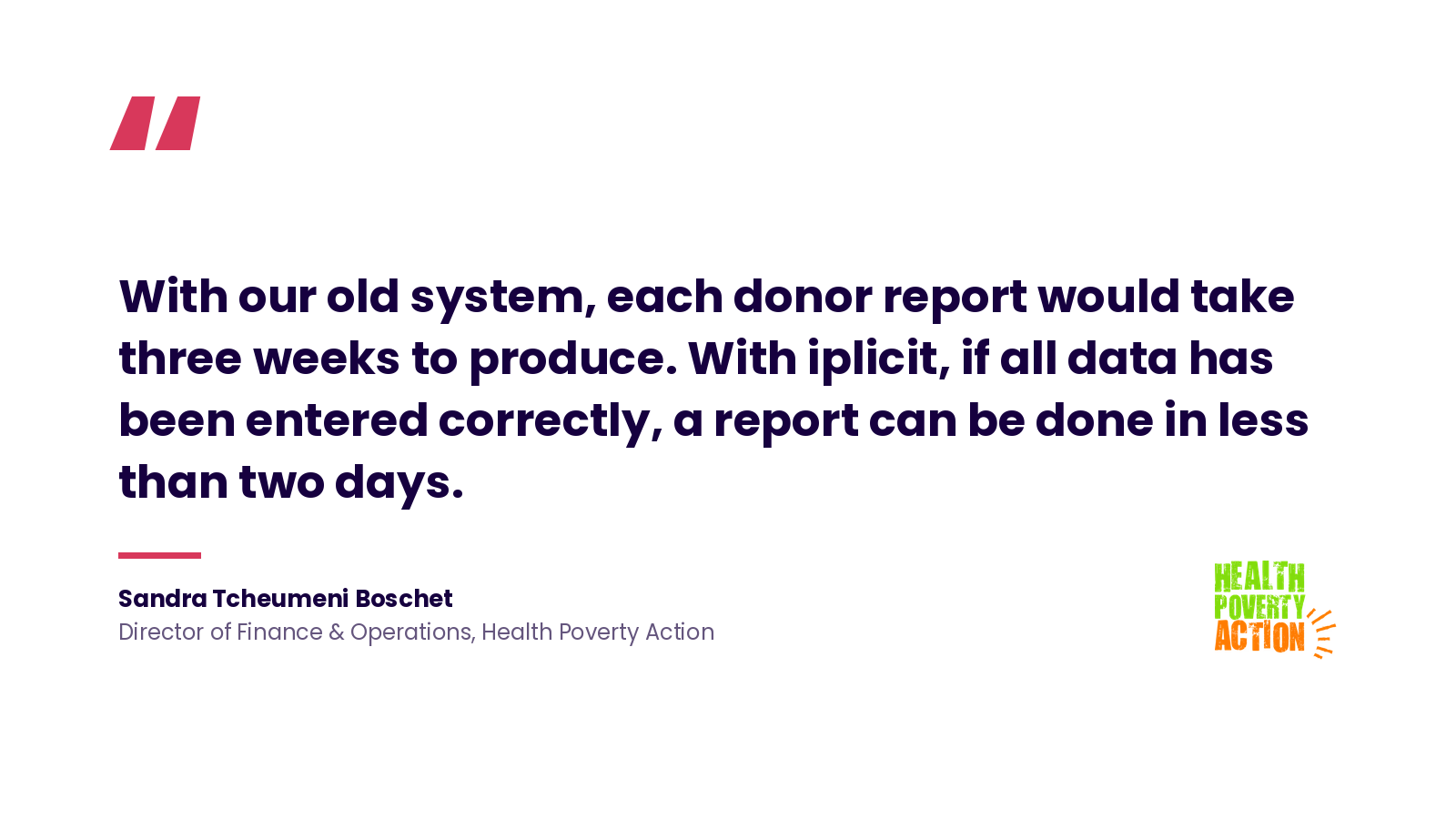
Health Poverty Action achieved immediate benefits, saving six weeks on the process of consolidating project balance sheets from multiple instances of QuickBooks. “With our old system, each donor report would take three weeks to produce,” says Sandra Tcheumeni Boschet, Director of Finance & Operations. “With iplicit, if all data has been entered correctly, a report can be done in less than two days.”
Walking With the Wounded saved 15 days every month on its month-end processes and produced the data that budget holders needed to make well-informed decisions. “Now, we can pretty much run off a view of the data in any way people ask for,” says Marc Brady, Head of Finance. “It’s massively improved our reporting.”
The bottom line
The three issues covered here – inconsistent processes, limited remote access and an outgrown system – all come down to the same root cause: finance software that was not built for how substantial nonprofits work today. Fixing the underlying system fixes all three at once, freeing up time and resources for the work that really delivers your mission.
The right systems provide the foundations that let your finance function stop firefighting and start supporting the strategic decisions your organisation needs to grow.
Want to go deeper?
Download iplicit's free guide covering the difference between on-premises, true cloud and fakecloud software and how nonprofits are using true cloud systems today.
Ready to see iplicit for yourself? Take a quick tour or book a demo.
What is true cloud accounting software?
True cloud accounting software is built and hosted to run over the internet from the ground up, rather than adapted from on-premises software. This means every user gets automatic updates, real-time data and secure access from any device, without needing their own servers or extra hardware.
What's the difference between true cloud and hosted ("fake cloud") software?
Hosted software, sometimes called fake cloud, takes traditional on-premises software and runs it on someone else's server. It looks similar to true cloud on the surface, but it does not remove the underlying limits on updates, integration or remote access that come from software built for a single location.
Why do nonprofit finance teams end up with inconsistent processes?
Inconsistent processes usually build up gradually, as different staff use different manual methods for the same task over time. The problem gets worse whenever a staff member with specialist knowledge of workarounds leaves, because that knowledge rarely gets fully handed over.
How do you know it's time to change your nonprofit's finance system?
Signs it is time to change include expensive or time-consuming upgrades, a vendor that no longer supports the software, and reporting that takes weeks rather than hours. If your system cannot support secure remote access, that is also a sign it is limiting who you can hire.
How does true cloud software support remote and flexible working?
True cloud software gives every authorised user secure, real-time access from any device with an internet connection. That removes the need for on-site servers or VPNs, so finance staff can work flexibly without your organisation losing control or visibility over its accounts.